Kitchen Drain Cleaning in Mesa, AZ
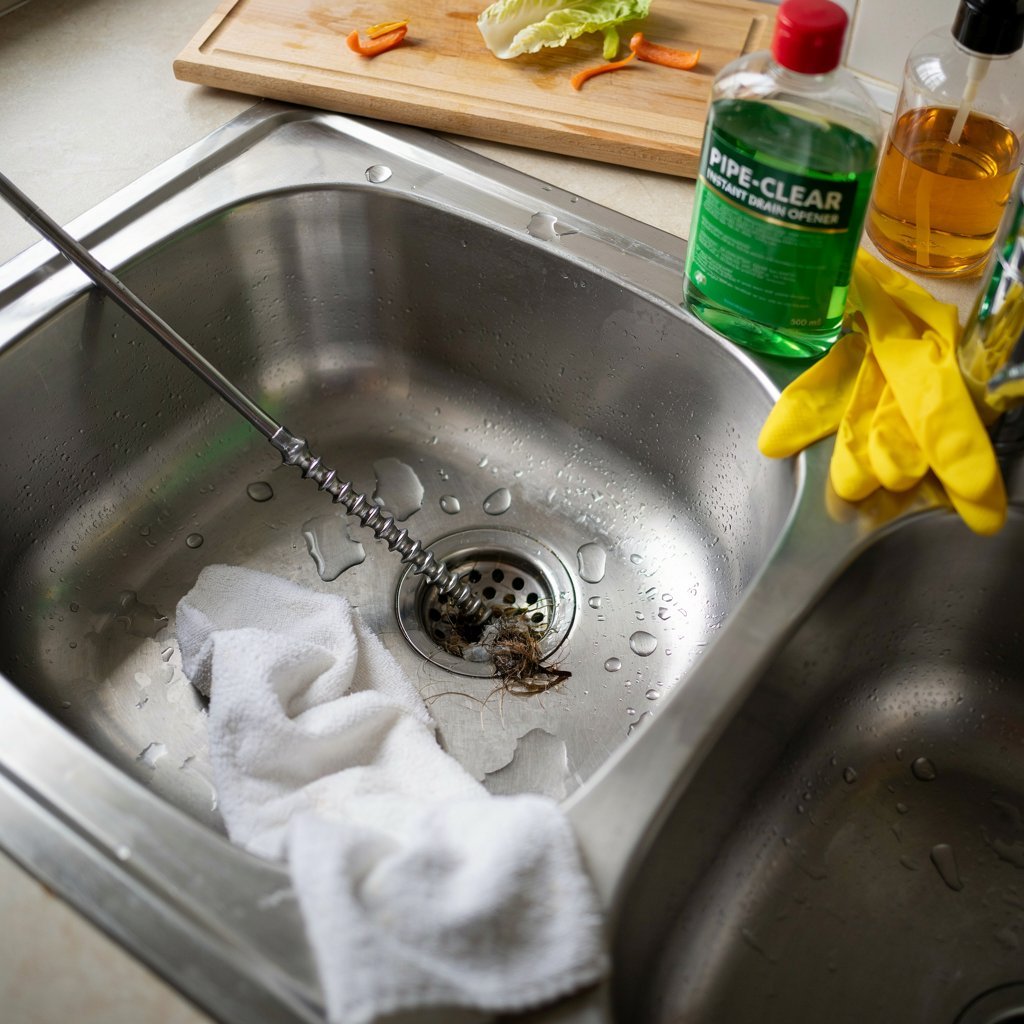
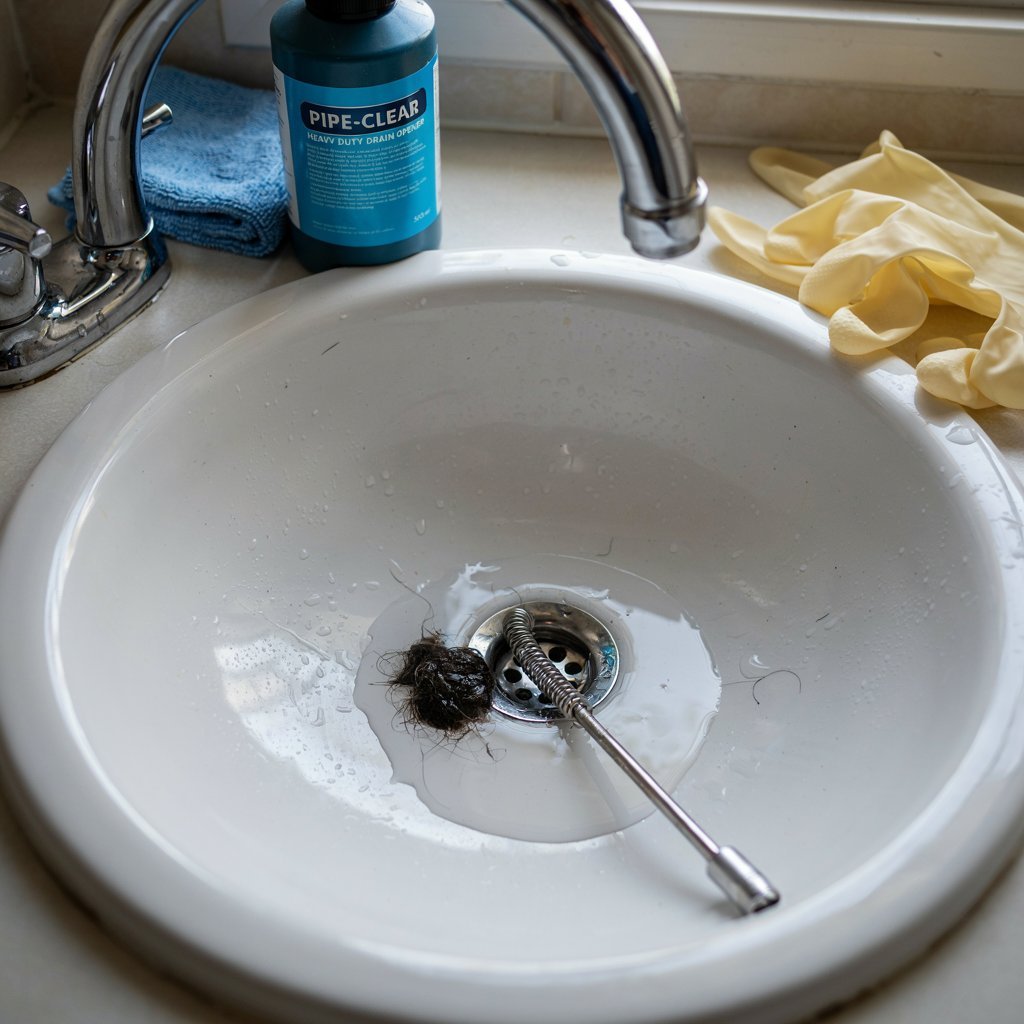
Kitchen sinks clog differently than almost any other fixture in the house. Grease, food particles, coffee grounds, and soap residue build up gradually along the inside of the pipe wall, narrowing it over time until water stops draining the way it should. By the time a kitchen sink is visibly slow or backing up, that buildup has usually been forming for weeks or months.
Our drain cleaning specialists clears kitchen drains at the trap, the branch line, and, where needed, the connection to the garbage disposal, so grease and debris are actually removed rather than pushed further down the pipe where they’ll cause a repeat clog in a few weeks.
Signs Your Kitchen Drain Needs Cleaning
A kitchen drain that gurgles while draining, empties slower than it used to, or causes water to back up into the second basin of a double sink usually points to a blockage in the trap or the branch line leading to the main stack. A persistent food or sewage odor coming from the sink, even after running the disposal, is another sign that debris has built up somewhere the disposal can’t reach.
If your kitchen sink and dishwasher are connected to the same line, a dishwasher that backs up or drains poorly can also point to a blockage in the shared kitchen drain line rather than a dishwasher malfunction.


What Causes Kitchen Drain Clogs
Grease and Cooking Oil
Grease poured down the drain doesn’t stay liquid once it cools. It coats the inside of the pipe and hardens, gradually narrowing the passage until food particles, coffee grounds, and other debris get caught in it and form a solid blockage.
Food Particles and Garbage Disposal Buildup
Even with a garbage disposal, some food particles are too fibrous or starchy to break down fully, such as potato peels, pasta, rice, and celery. These can accumulate in the trap or branch line below the disposal over time.
Soap and Detergent Residue
Dish soap and detergent residue combine with grease and food particles to form a thick buildup along pipe walls, which is one reason a kitchen drain clog often develops gradually rather than happening all at once.
Foreign Objects
Small items like fruit stickers, bottle caps, or utensil handles occasionally slip past the disposal and lodge in the trap, causing a sudden blockage rather than a gradual one.
Our Kitchen Drain Cleaning Process
Step 1 — Assess the Symptoms
We start by asking whether the clog is isolated to one sink, affects a double basin, or involves a connected dishwasher, which helps identify where the blockage likely sits.
Step 2 — Clear the Trap and Branch Line
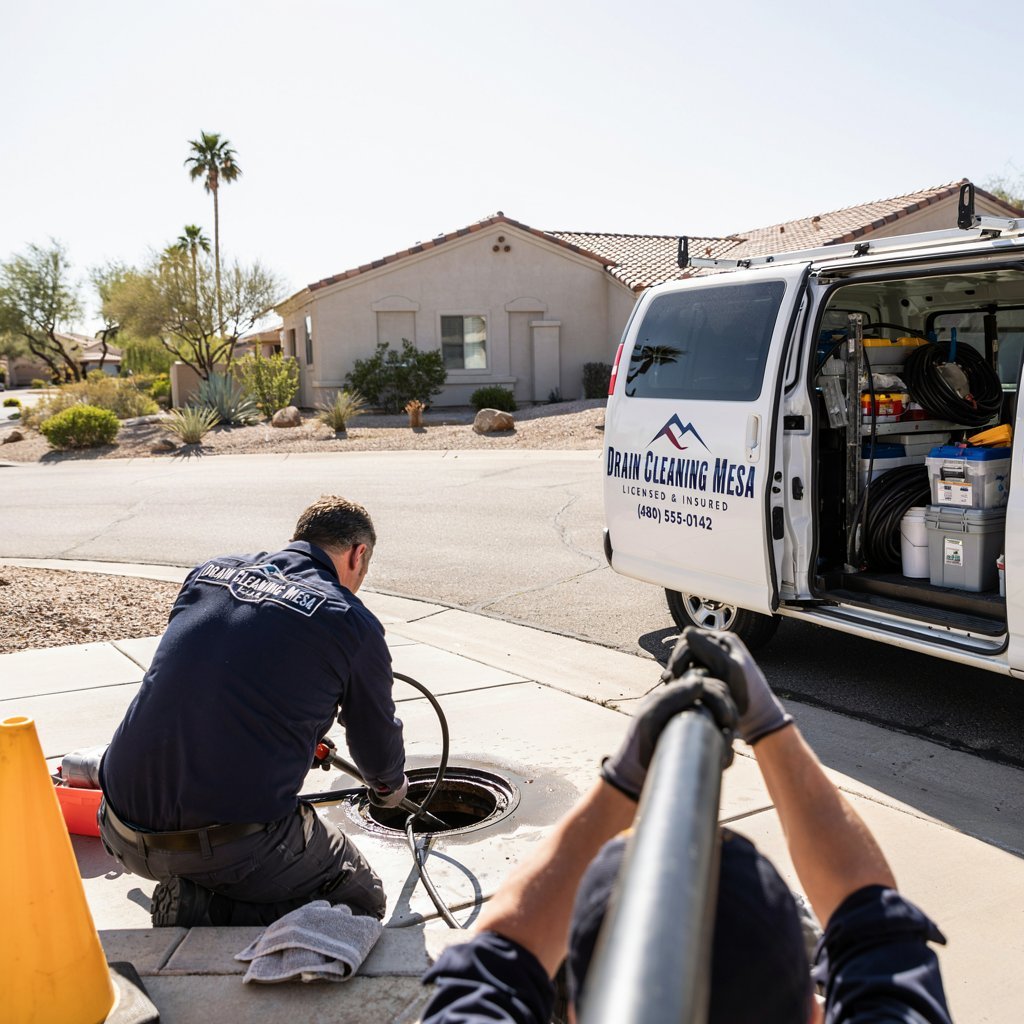
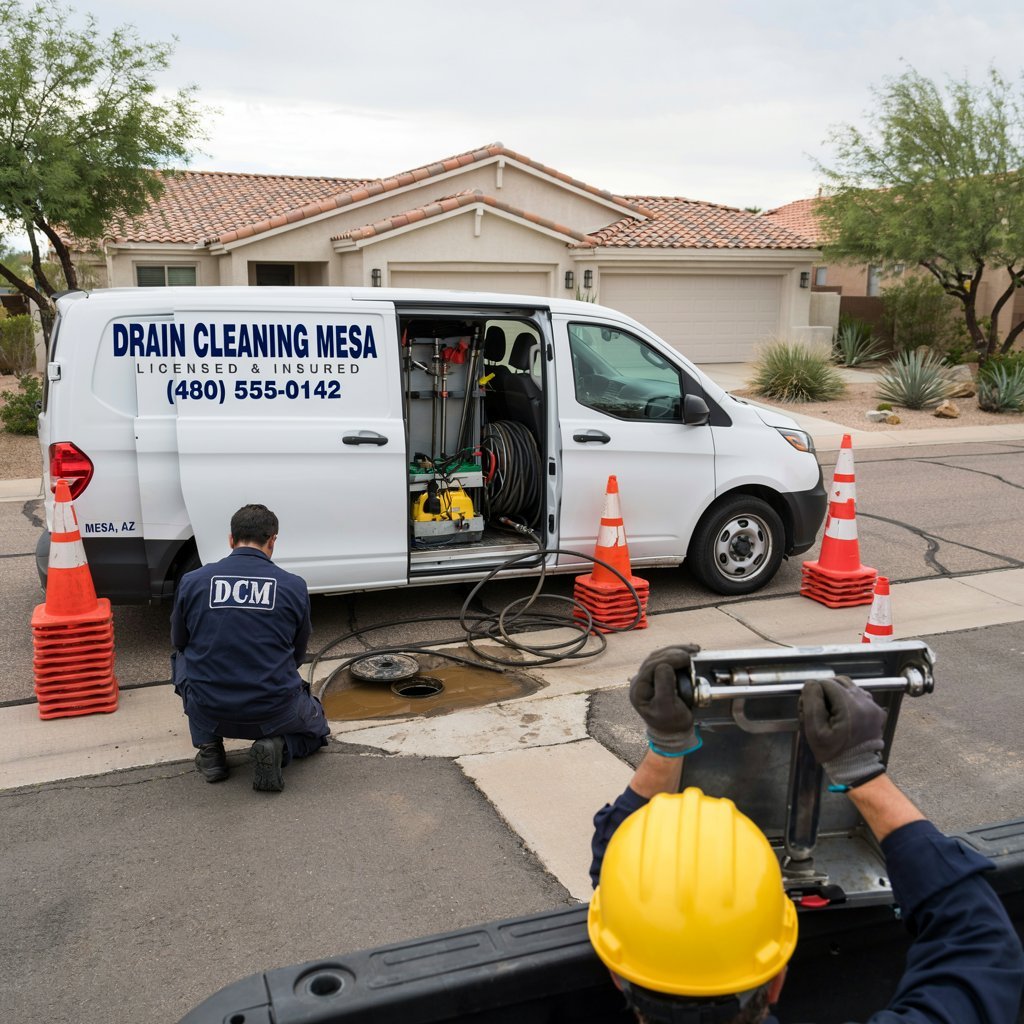
Using a hand-fed or motorized cable sized for kitchen drain lines, we clear the trap and the branch line leading to the main stack, removing the grease, food debris, and buildup causing the clog.
Step 3 — Check the Disposal Connection
If a garbage disposal is present, we check the connection point for buildup or a partial blockage that could be contributing to slow drainage even after the branch line is cleared.
Step 4 — Test and Confirm
We run water through the sink, and the dishwasher if connected, to confirm normal drainage and check for any remaining slow spots.
Step 5 — Recommend Maintenance
Where grease buildup is significant or recurring, we’ll explain what’s contributing to it and whether periodic cleaning or hydro jetting would help prevent the same clog from returning.
Customer Testimonials
When Hydro Jetting Makes Sense for Kitchen Lines
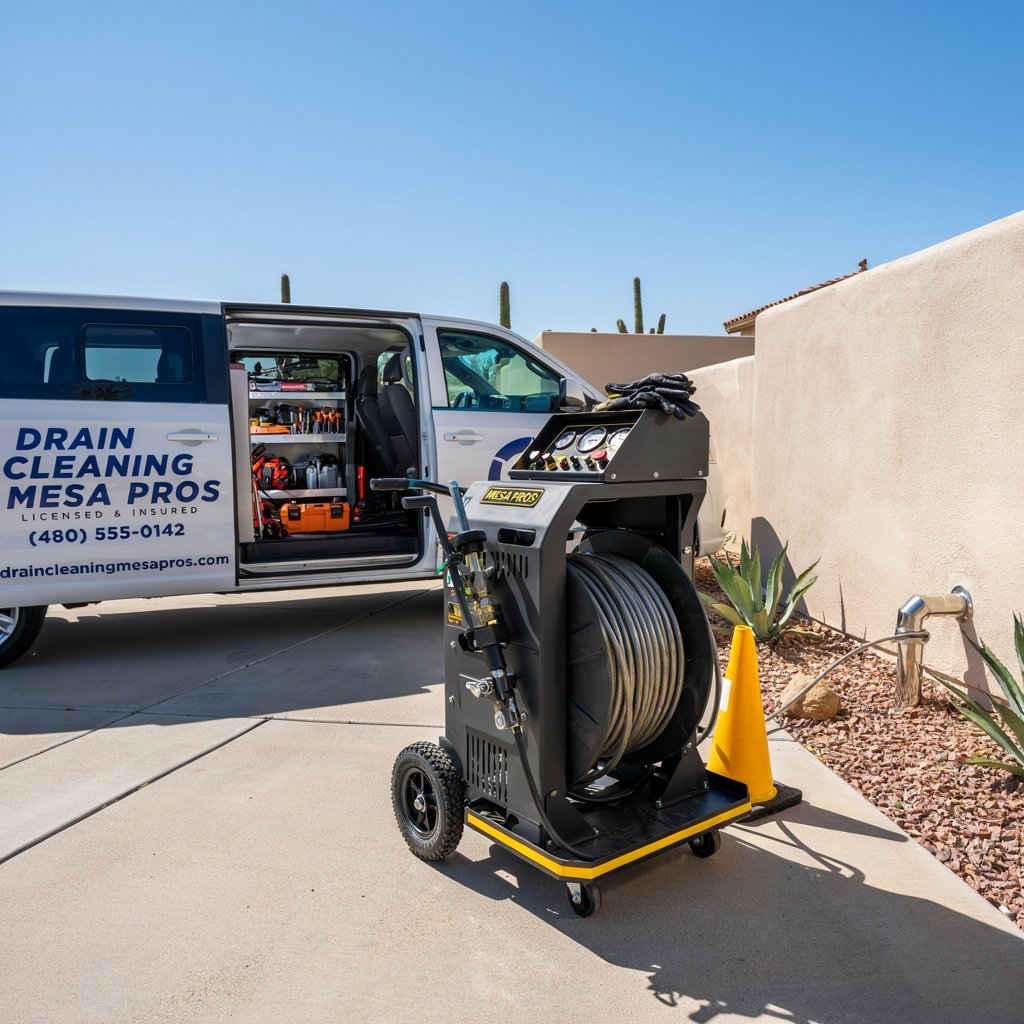
A standard cabling clears a path through a kitchen drain clog, but heavy, longstanding grease buildup often coats the entire interior of the pipe rather than sitting in one spot. In these cases, hydro jetting scours the full circumference of the pipe wall, which tends to extend the time between clogs compared to cabling alone. We’ll recommend jetting specifically when a kitchen line has a history of recurring clogs shortly after being cleared.
Cost of Kitchen Drain Cleaning in Mesa
Kitchen drain cleaning cost depends on where the blockage sits, whether it’s isolated to the trap or extends further into the branch line, and whether hydro jetting is needed for a longstanding grease buildup. Most kitchen drain clogs are less involved than a sewer line cleaning, since the affected section of pipe is typically shorter. We provide a clear price after assessing the clog, before any work begins.
Why Mesa Homeowners Choose Us for Kitchen Drain Cleaning
Kitchen drain clogs are one of the most common calls we get, and also one of the most likely to come back if the underlying grease buildup isn’t fully addressed. We focus on clearing the full length of the affected line rather than just punching through the immediate blockage, which is why our kitchen drain work tends to last rather than needing a repeat visit within a few weeks.
Frequently Asked Questions
Why does my kitchen sink drain slowly even after using the garbage disposal?
A garbage disposal breaks down food waste but doesn’t remove grease or soap residue that builds up along the pipe walls further down the line. Slow drainage despite disposal use usually points to a blockage in the trap or branch line rather than the disposal itself.
Can I pour hot water down the drain to clear grease buildup?
Hot water may temporarily move softened grease further down the line, but it typically re-hardens once it cools, often creating a blockage further along the pipe rather than actually removing it. Professional cleaning removes the buildup rather than relocating it.
Why does water back up into my other sink when I run the disposal?
If both sides of a double kitchen sink share the same drain line, a blockage in that shared line can cause water to back up into the opposite basin when one side is used. This points to a clog in the branch line rather than an issue with a single basin.
How often should kitchen drains be professionally cleaned?
This depends on cooking habits and how much grease or oil typically goes down the drain. Households that cook frequently with oil or fat may benefit from cleaning every one to two years, while lighter use may need it far less often.
Is hydro jetting necessary for a kitchen drain clog?
Not always. A standard cabling is often sufficient for an isolated clog. Hydro jetting is typically recommended when a kitchen line has a documented history of recurring clogs shortly after being cleared, which usually indicates grease coating the full length of the pipe.
What should I avoid putting down my kitchen drain?
Grease, cooking oil, coffee grounds in large amounts, fibrous vegetable peels, pasta, rice, and eggshells are common contributors to kitchen drain clogs and are best disposed of in the trash rather than the sink.