Storm Drain Cleaning in Mesa, AZ
Arizona’s monsoon season brings sudden, heavy rainfall that can expose a clogged storm drain within minutes. Leaves, silt, landscaping debris, and dirt washed off yards, driveways, and streets collect in area drains, catch basins, and the underground piping that’s supposed to carry runoff away from the property. When that system is blocked, water has nowhere to go, which often means standing water in the yard, flooding near walkways, or water pooling close to a foundation during a heavy storm.
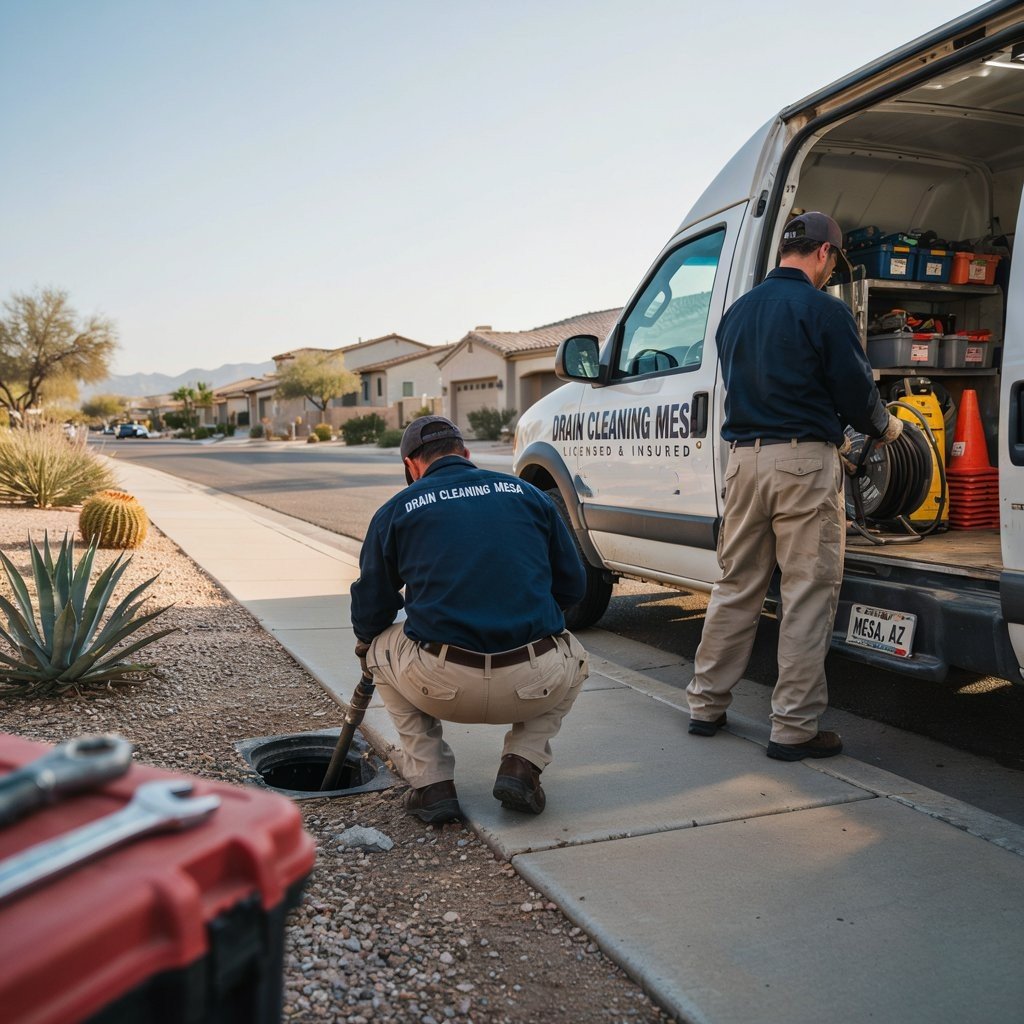
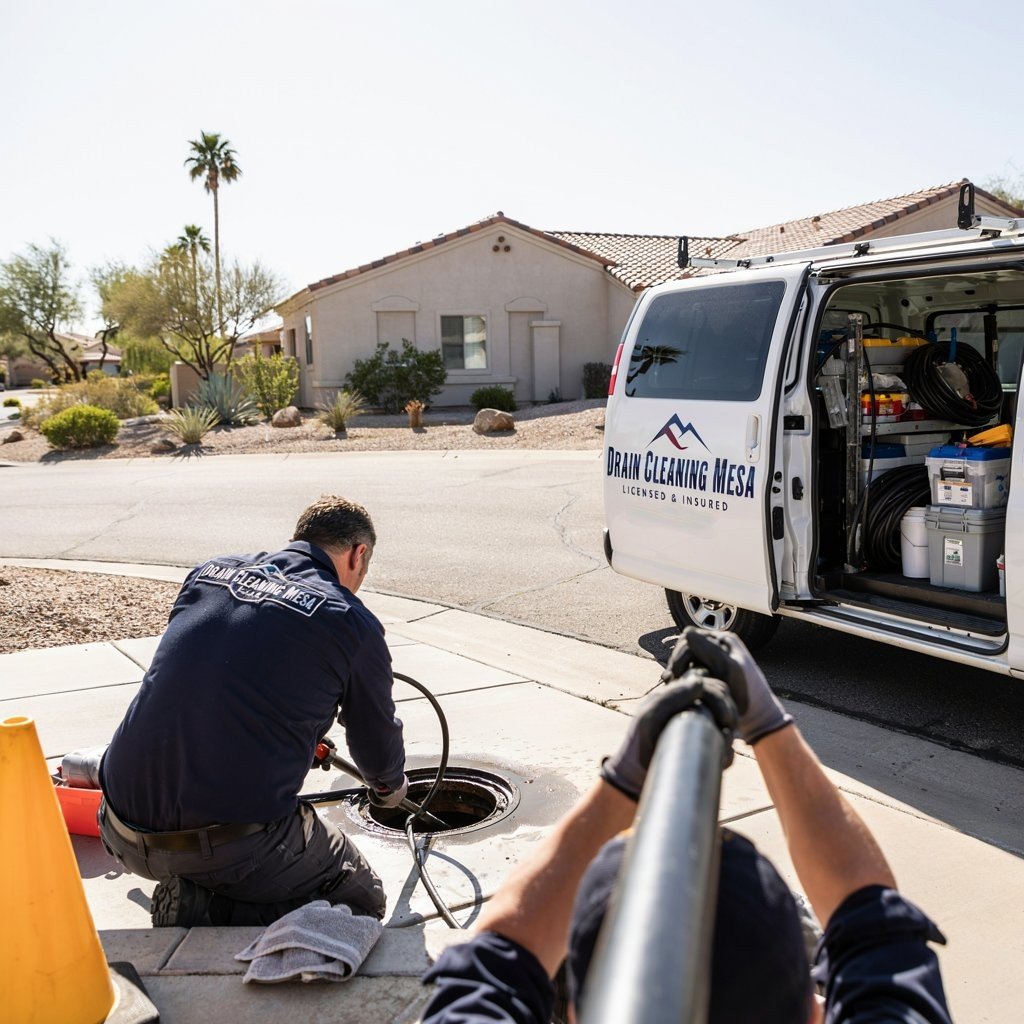
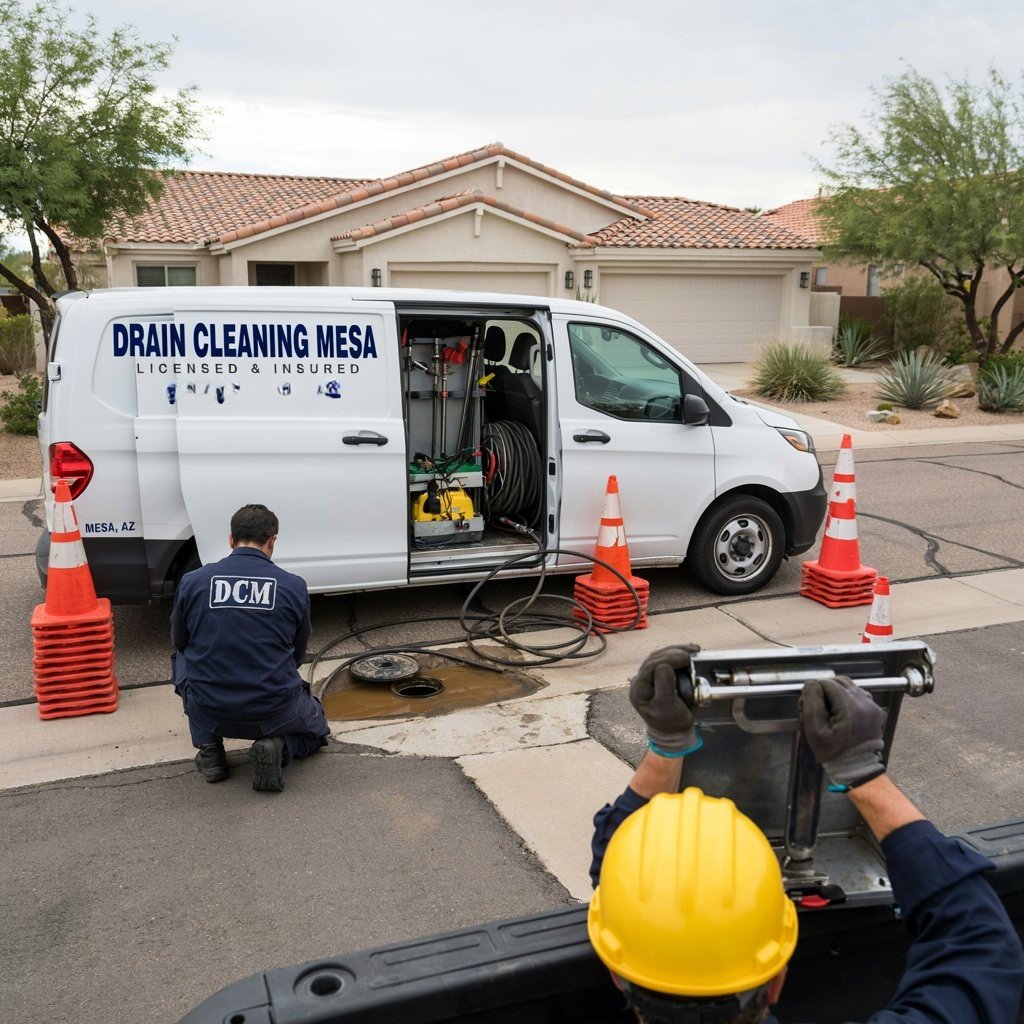
Our drain experts clears catch basins, area drains, and the connecting lines that carry stormwater away from residential and commercial properties, so the system is ready before the next monsoon storm rolls through rather than after water has already caused a problem.
Signs Your Storm Drain Needs Cleaning
Standing water in the yard well after a storm has passed, water pooling near a patio, walkway, or driveway, a catch basin or area drain grate visibly clogged with leaves and debris, and water backing up out of a drain during heavy rain are all signs that a storm drain system isn’t draining the way it should. Properties with mature landscaping, nearby trees, or areas prone to collecting runoff from neighboring lots tend to see these issues more often.
What Causes Storm Drain Blockages in Mesa
Leaves and Landscaping Debris
Falling leaves, palm fronds, and general yard debris are carried by runoff directly into area drains and catch basins, where they accumulate and block the flow of water into the underground piping.
Silt and Dirt Buildup
Arizona’s dry spells between rain events allow dirt and dust to accumulate on hard surfaces. When monsoon rain finally arrives, that dirt washes into storm drains in large volumes, settling as silt inside catch basins and pipes.
Root Intrusion Into Storm Lines
Just as with sewer lines, tree roots can find their way into storm drain piping through cracks or joints, gradually restricting flow and catching debris until the line backs up.
Undersized or Aging Infrastructure
Some older properties in Mesa have storm drain systems that were adequate for the property’s original landscaping and drainage needs but may struggle with heavier rainfall or changes made to the property since, such as added hardscaping that increases runoff volume.
Our Storm Drain Cleaning Process
Step 1 — Inspect the Drainage System
We start by locating the catch basins, area drains, and connecting lines on the property and identifying where water is failing to drain properly.
Step 2 — Clear Surface Debris
Leaves, silt, and debris sitting in catch basins and at drain grates are cleared first, since this is often a significant part of the blockage and gives us a clear view of the drain opening.
Step 3 — Clean the Connecting Lines
We clear the underground piping connecting area drains and catch basins to confirm water can flow freely to its intended discharge point, using cabling or jetting depending on the type and severity of the blockage.
Step 4 — Test Drainage
Where possible, we test the system by running water through it to confirm it drains properly rather than assuming a cleared basin means the entire line is clear.
Step 5 — Recommend Preventive Steps
For properties with recurring storm drain issues, we’ll walk through options like installing debris guards or scheduling cleaning ahead of monsoon season to reduce the chance of flooding during heavy rain.
Customer Testimonials
Preparing Your Property Before Monsoon Season
Storm drain problems are far easier to prevent than to fix during an active downpour. Having catch basins and area drains cleaned before monsoon season begins each year reduces the risk of yard flooding, water pooling near a foundation, or standing water becoming a mosquito breeding concern during Arizona’s wetter months.
Cost of Storm Drain Cleaning in Mesa
Storm drain cleaning cost depends on the number of catch basins and area drains involved, how much debris has accumulated, and the length of the connecting lines that need to be cleared. Properties with extensive landscaping or multiple drainage points typically involve more work than a single area drain. We provide a firm price after inspecting the system, before any work begins.
Why Mesa Property Owners Choose Us for Storm Drain Cleaning
Monsoon season doesn’t leave much room for a slow response once a property starts flooding, which is why we treat storm drain cleaning as a service worth addressing proactively rather than only after a storm has already caused damage. We clear the full system, catch basins, area drains, and connecting lines, rather than just clearing the visible surface debris and calling it done.
Services We Provide
Residential
✅Clogged Drain Repair
✅Drain Snaking
✅Hydro Jetting
✅Video Camera Drain Inspection
✅Sewer Line Cleaning
✅Bathroom Drain Cleaning
✅Kitchen Drain Cleaning
✅Toilet Drain Cleaning
✅Laundry Drain Cleaning
✅Basement Drain Cleaning
✅Roof Drain Cleaning
✅Downspout Drain Cleaning
✅Preventative Drain Maintenance
✅Drain Odor Diagnosis and Removal
✅Slow Drain Diagnosis and Repair
✅Vent Stack Cleaning
✅Water Leak Detection
✅Main Line Cleaning
✅Floor Drain Cleaning
Frequently Asked Questions
Why does my yard flood every time it rains heavily?
Recurring yard flooding after rain usually points to a blocked catch basin, area drain, or connecting pipe that isn’t carrying water away as designed. Leaves, silt, and landscaping debris are the most common causes in Mesa.
When should storm drains be cleaned before monsoon season?
Cleaning catch basins and area drains before monsoon season begins each year, typically in late spring, helps reduce the risk of flooding once heavy rainfall starts. Properties with mature landscaping or a history of drainage issues benefit most from this timing.
Can tree roots block a storm drain the same way they block a sewer line?
Yes. Tree roots can enter storm drain piping through cracks or loose joints in the same way they affect sewer lines, gradually restricting flow and catching debris until the line backs up.
What's the difference between a catch basin and an area drain?
A catch basin is typically a larger, below-grade structure designed to collect runoff from a wider area and filter out debris before water enters the piping system, while an area drain is usually a smaller surface drain positioned at a specific low point to capture localized water.
Is storm drain cleaning only necessary for large properties?
No. Even smaller residential properties with a single area drain or catch basin can experience flooding if that drain becomes blocked, especially during Arizona’s intense monsoon downpours.
How can I prevent my storm drain from clogging as often?
Keeping catch basins and drain grates clear of leaves and debris, adding a debris guard where appropriate, and scheduling cleaning ahead of monsoon season are the most effective ways to reduce how often storm drains clog.