Hydro Jetting in Mesa, AZ
Hydro jetting uses a high-pressure stream of water, rather than a mechanical cable, to clean the full interior wall of a drain or sewer pipe. Where cabling primarily cuts a path through a blockage, jetting scours the entire circumference of the pipe, removing grease, scale, sludge, and root intrusion along the way rather than just opening a channel through the middle of it.
When it comes to cleaning drains in Mesa, AZ we uses hydro jetting for grease-heavy kitchen lines, sewer mains with years of buildup, and any drain with a documented history of clogs returning shortly after a standard cabling. It’s a more thorough cleaning method, and we recommend it specifically when the situation calls for it rather than as a default for every job.
How Hydro Jetting Works
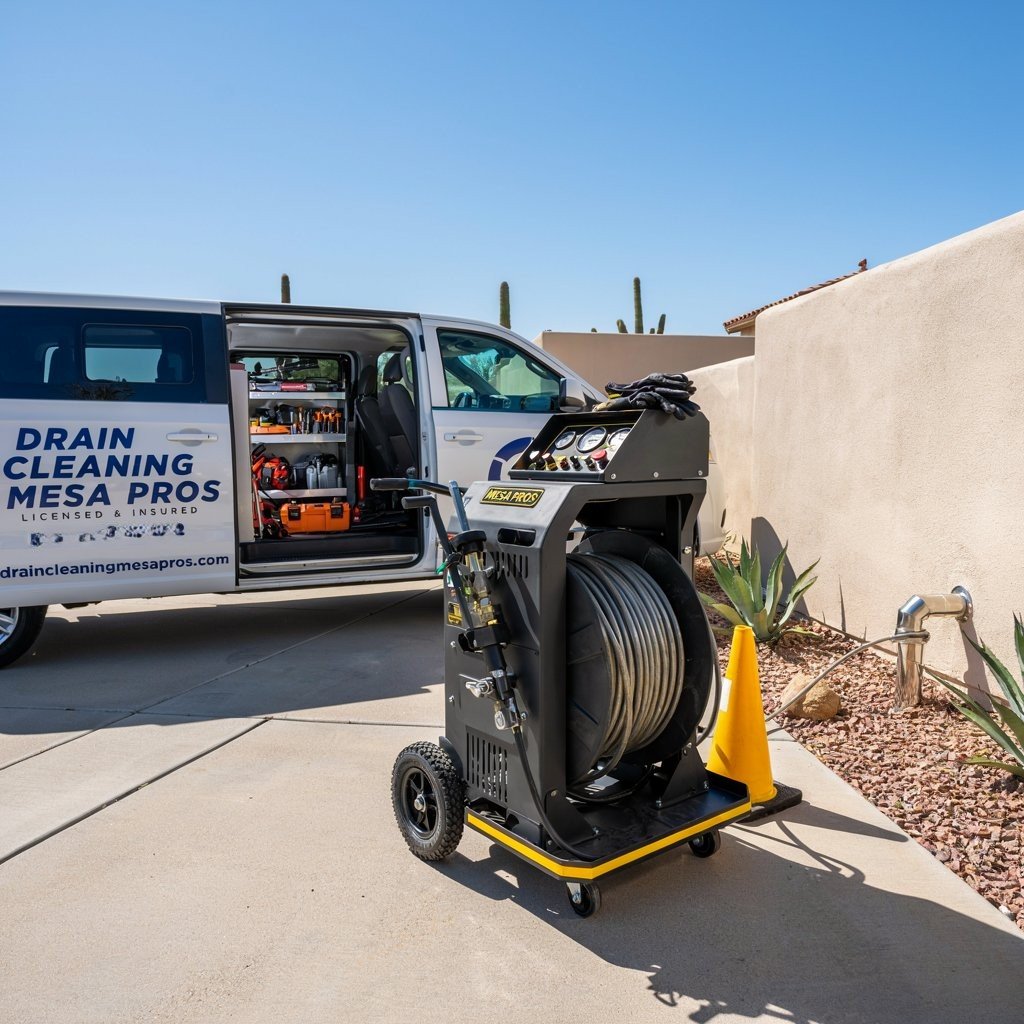
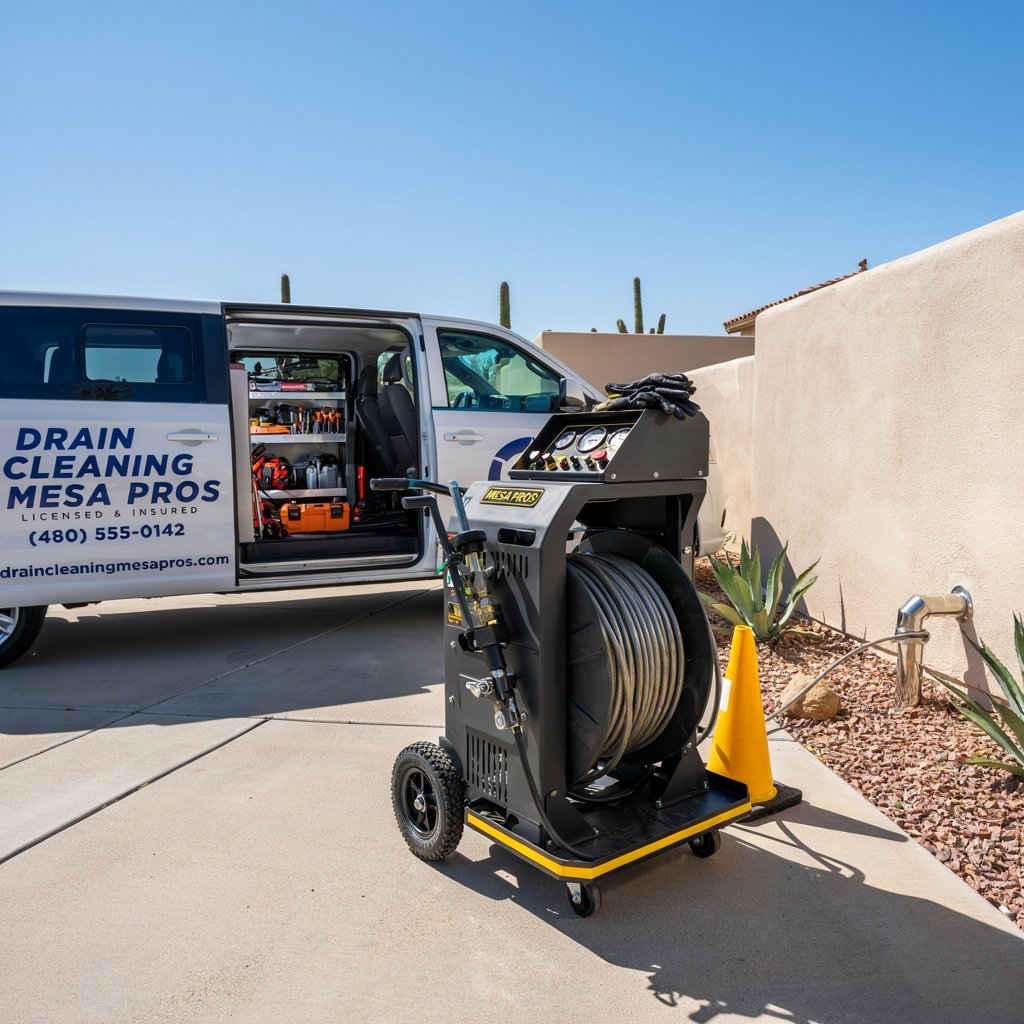
A jetting machine pumps water through a specialized hose and nozzle at pressures typically ranging from a few thousand to several thousand pounds per square inch, depending on the pipe material and the severity of the buildup. The nozzle is fed into the line and pulled back through, with jets angled both forward and backward to break up debris ahead of the nozzle and scour the pipe walls as it retracts. The dislodged material is flushed out through the system’s normal flow path.
Unlike cabling, which relies on a rotating blade or auger to physically cut through a blockage, jetting relies entirely on water pressure and volume, making it effective against buildup that coats the pipe rather than sitting as a single obstruction.
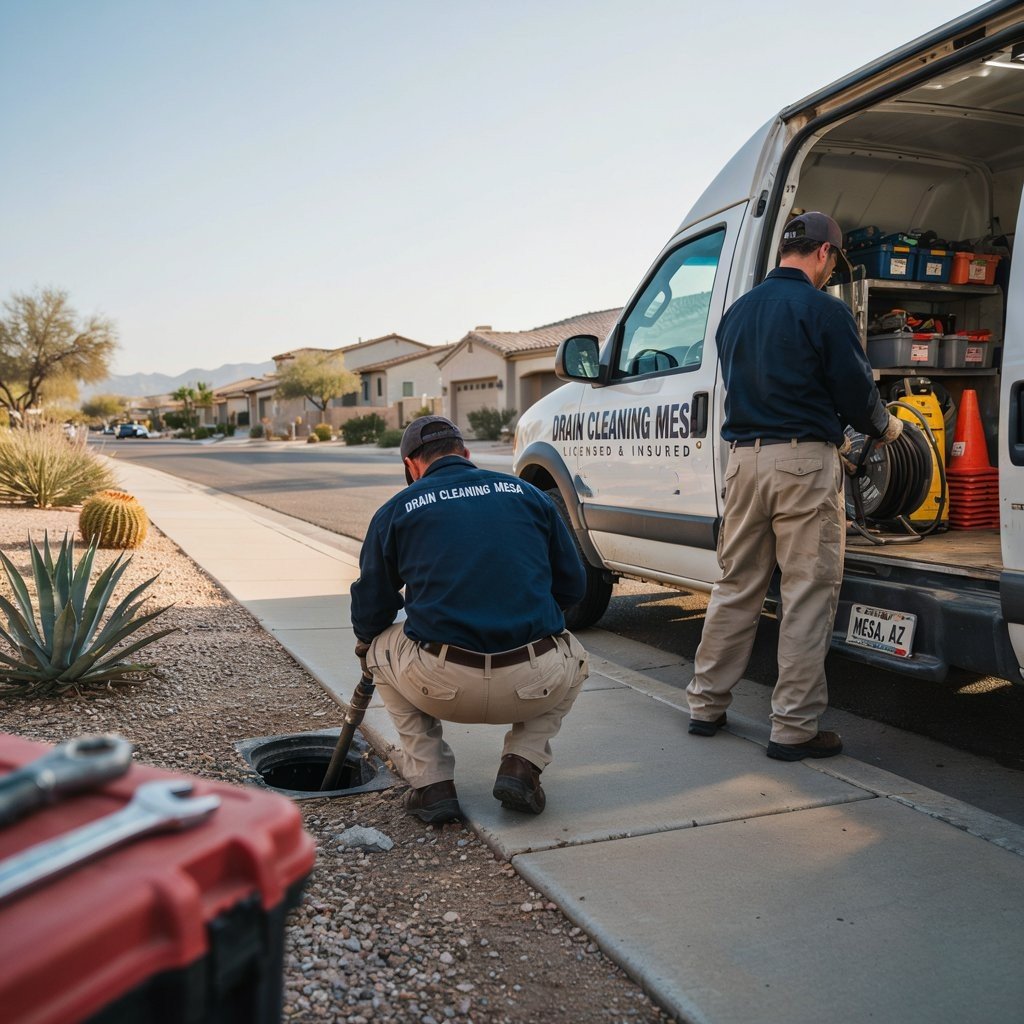
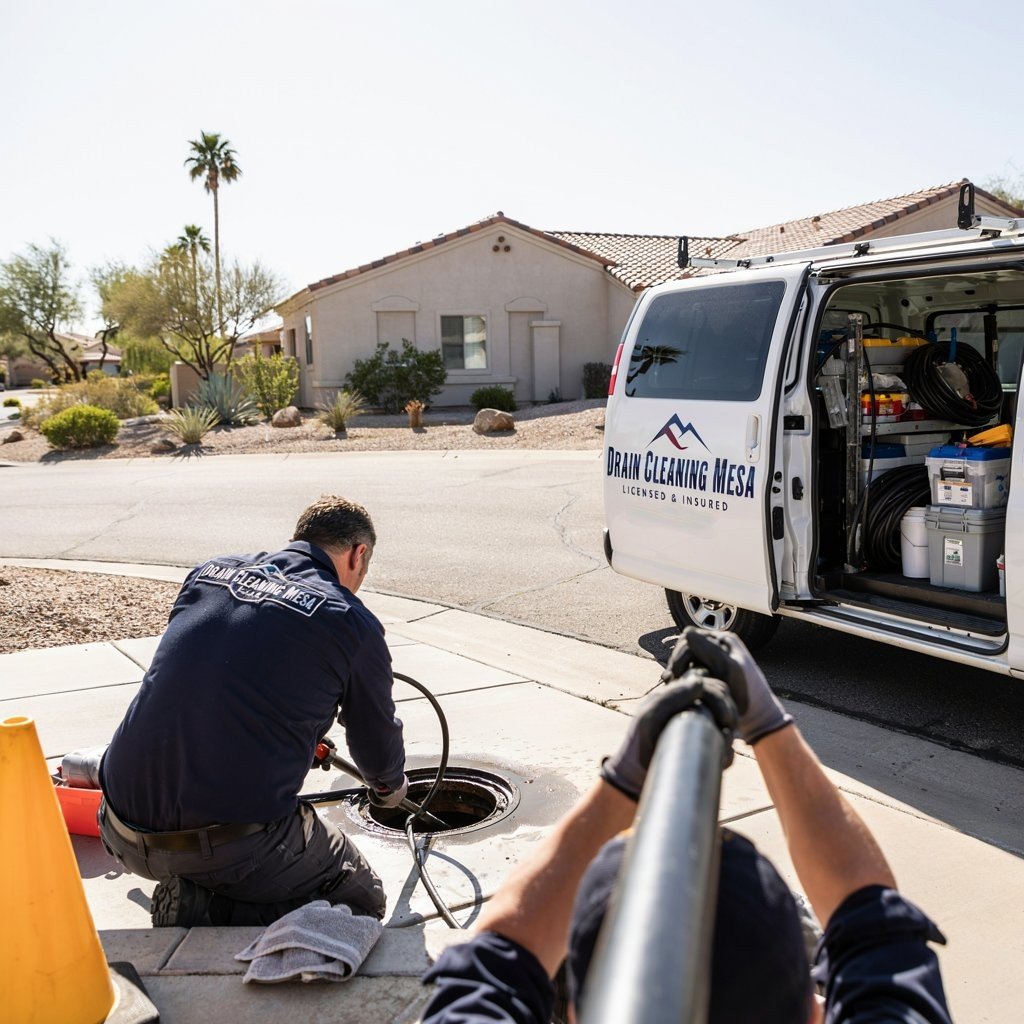
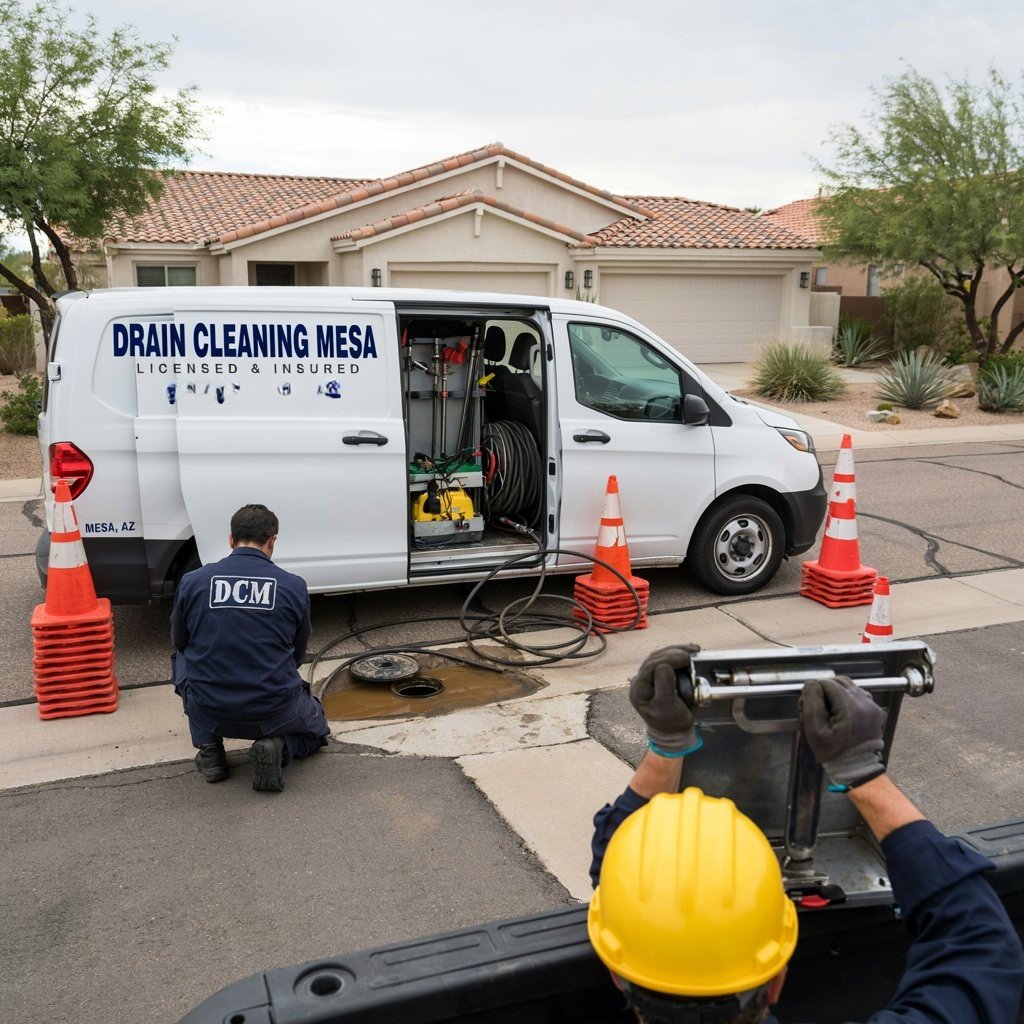
When Hydro Jetting Is the Right Choice
Grease-Heavy Kitchen and Restaurant Lines
Grease that has coated a pipe’s interior over months or years often can’t be fully removed by cabling alone, since a cable tends to cut a path through the buildup rather than removing it from the walls. Jetting is a common recommendation for kitchen lines, especially in restaurants or households with heavy cooking habits, where recurring grease clogs are common.
Sewer Lines With Root Intrusion
Jetting nozzles fitted with root-cutting attachments can clear root intrusion more thoroughly than standard cabling, cutting roots back across the full diameter of the pipe rather than just punching a path through them.
Recurring Clogs After Cabling
If a drain has been cabled recently and clogged again within a short period, that’s often a sign the buildup extends along more of the pipe than a cable addressed. Jetting is typically the next step in these cases.
Preventive Maintenance for High-Use Lines
Some properties, particularly restaurants and larger households, benefit from periodic jetting as scheduled maintenance rather than waiting for a full blockage to develop, since it tends to extend the time between clogs compared to cabling alone.
Our Hydro Jetting Process
Step 1 — Camera Inspection
Before jetting, we run a drain camera through the line to confirm the pipe material, condition, and the type of buildup causing the problem.
Step 2 — Confirm Jetting Is Appropriate
Based on what the camera shows, we confirm that jetting is safe and appropriate for the pipe, rather than assuming it’s the right method for every job.
Step 3 — Jet the Line
We feed the jetting hose through the line, using pressure and nozzle settings appropriate to the pipe material and the buildup we’re clearing.
Step 4 — Follow-Up Camera Check
For sewer lines and significant buildup, we run the camera through again after jetting to confirm the pipe is fully clear along its length, not just at the entry point.
Step 5 — Explain Findings
We walk through what the jetting removed, whether the pipe shows any signs of wear or damage, and whether periodic jetting makes sense going forward.
Customer Testimonials
When Hydro Jetting Isn't the Right Fit
Jetting isn’t appropriate for every pipe. Older, more fragile pipe materials, including some clay and Orangeburg pipe found in older Mesa homes, can be damaged by high water pressure if the pipe’s condition isn’t first confirmed. This is why we always inspect a line with a drain camera before jetting, to confirm the pipe material and condition can safely handle the pressure. If a camera inspection reveals a structural issue like a collapsed section or significant deterioration, jetting alone won’t resolve it, and repair options need to be considered first.
Cost of Hydro Jetting in Mesa
Hydro jetting cost depends on the length of the line being cleaned, the severity of the buildup, and whether a camera inspection is needed before and after the jetting itself. It typically costs more than a standard cabling because of the specialized equipment and additional time involved, but it’s often the more cost-effective option long-term for lines with recurring clogs, since it reduces how often the drain needs to be cleared again. We provide a clear price after assessing the line, before any work begins.
Why Mesa Homeowners and Businesses Choose Us for Hydro Jetting
We don’t recommend hydro jetting by default. Every jetting job starts with a camera inspection to confirm it’s the right method for the pipe in question, which protects older lines from unnecessary pressure while still giving grease-heavy and recurring-clog situations the thorough cleaning they actually need.
Services We Provide
Residential
✅Clogged Drain Repair
✅Drain Snaking
✅Hydro Jetting
✅Video Camera Drain Inspection
✅Sewer Line Cleaning
✅Bathroom Drain Cleaning
✅Kitchen Drain Cleaning
✅Toilet Drain Cleaning
✅Laundry Drain Cleaning
✅Basement Drain Cleaning
✅Roof Drain Cleaning
✅Downspout Drain Cleaning
✅Preventative Drain Maintenance
✅Drain Odor Diagnosis and Removal
✅Slow Drain Diagnosis and Repair
✅Vent Stack Cleaning
✅Water Leak Detection
✅Main Line Cleaning
✅Floor Drain Cleaning
Frequently Asked Questions
What is hydro jetting used for?
Hydro jetting uses high-pressure water to clean the entire interior wall of a drain or sewer pipe, removing grease, sludge, scale, and root intrusion. It’s commonly used for grease-heavy kitchen lines, sewer mains with heavy buildup, and drains with a history of recurring clogs.
Is hydro jetting safe for all pipes?
No. Older or more fragile pipe materials, including some clay and Orangeburg pipe, can potentially be damaged by high water pressure if the pipe’s condition isn’t confirmed first. A camera inspection before jetting confirms whether the pipe can safely handle the process.
How is hydro jetting different from snaking or cabling a drain?
Cabling uses a rotating cable or auger to cut a path through a blockage, while jetting uses high-pressure water to clean the full circumference of the pipe wall. Jetting tends to remove more buildup overall, while cabling is often sufficient for a simple, isolated clog.
How often should hydro jetting be done?
This depends on the type of line and how quickly buildup tends to form. Grease-heavy kitchen and restaurant lines may benefit from jetting every year or two as preventive maintenance, while sewer lines with a history of root intrusion may follow a similar schedule based on inspection findings.
Does hydro jetting remove tree roots from a sewer line?
Jetting nozzles fitted with root-cutting attachments can cut back root intrusion across the full diameter of the pipe. For significant or recurring root problems, jetting is often paired with a longer-term plan that may include periodic maintenance or, in some cases, pipe repair.
Is hydro jetting more expensive than a standard drain cleaning?
Typically, yes, since it requires specialized equipment and more time than a standard cabling. However, it often reduces how frequently a line needs to be cleaned again, which can make it more cost-effective over time for drains with recurring buildup.