Commercial Drain Cleaning Mesa
A backed-up drain at a home is an inconvenience. A backed-up drain at a restaurant on Main Street, a retail center near Superstition Springs, or a warehouse off Falcon Field is a business problem — closed dining rooms, health code violations, flooded loading docks, and customers who don’t come back. Commercial plumbing systems take on far more daily volume than residential lines, and they clog for different reasons: grease from a commercial kitchen, storm runoff pooling across a parking lot, or a septic or grease trap that hasn’t been serviced on schedule.
Commercial Drain Cleaning Services We Provide in Mesa, AZ
Storm Drain Cleaning
Monsoon season sends heavy runoff across parking lots and loading areas fast. We clear debris from commercial storm drainage so water moves off the property instead of pooling near entrances and docks.
Catch Basin Cleaning
Sediment, trash, and debris settle into catch basins over time, reducing how much runoff they can hold. We remove built-up sediment from catch basins to keep stormwater systems working during heavy rain.
Grease Trap Cleaning
A neglected grease trap backs up kitchen lines and risks a health code violation. We pump and clear built-up grease and solids on a schedule that fits your kitchen’s volume.
Septic Line Cleaning
Properties on septic systems outside Mesa’s main sewer grid need regular line maintenance to avoid backups. We clear solids and buildup from septic lines before they cause a slowdown or overflow.
Trenchless Sewer Line Cleaning
Root intrusion and scale buildup in a commercial sewer main don’t always require digging up a parking lot or driveway. We clear the line from existing access points with minimal disruption to daily operations.
Backflow Prevention and Cleaning
A backflow preventer that isn’t maintained can let contaminated water flow the wrong direction into a clean water supply. We service and clean backflow prevention devices to keep them compliant and functioning.
Flooded Yard Cleaning
Standing water across a commercial yard or lot after a storm usually points to a blocked drainage path underneath. We track down the cause of standing water and clear it so the property drains properly again.
Grease Interceptor Cleaning
Larger food service operations rely on grease interceptors to handle higher volume than a standard trap. We clean and service grease interceptors to keep kitchen drainage compliant and backup-free.
Sand Trap Cleaning
Car washes, auto shops, and industrial sites use sand traps to keep grit and debris out of the main drain system. We clear accumulated sediment from sand traps before it restricts flow downstream.
Signs Your Mesa Business Needs Drain Cleaning
Commercial drain problems often show up before a full backup does, and catching them early keeps a small maintenance visit from turning into a shutdown. Slow-draining floor drains in a kitchen or utility area, water pooling in a parking lot after light rain, or a grease trap that needs pumping more often than it used to are all early warning signs worth acting on right away.
Odor is another indicator that’s easy to overlook in a busy commercial space. A sour or sulfur smell near a kitchen floor drain, a loading dock, or a grease interceptor usually points to buildup that’s been sitting for a while, not something a quick surface clean will fix. In older commercial buildings near Downtown Mesa and along Main Street, aging drain lines can carry this smell for months before a full blockage forces the issue.
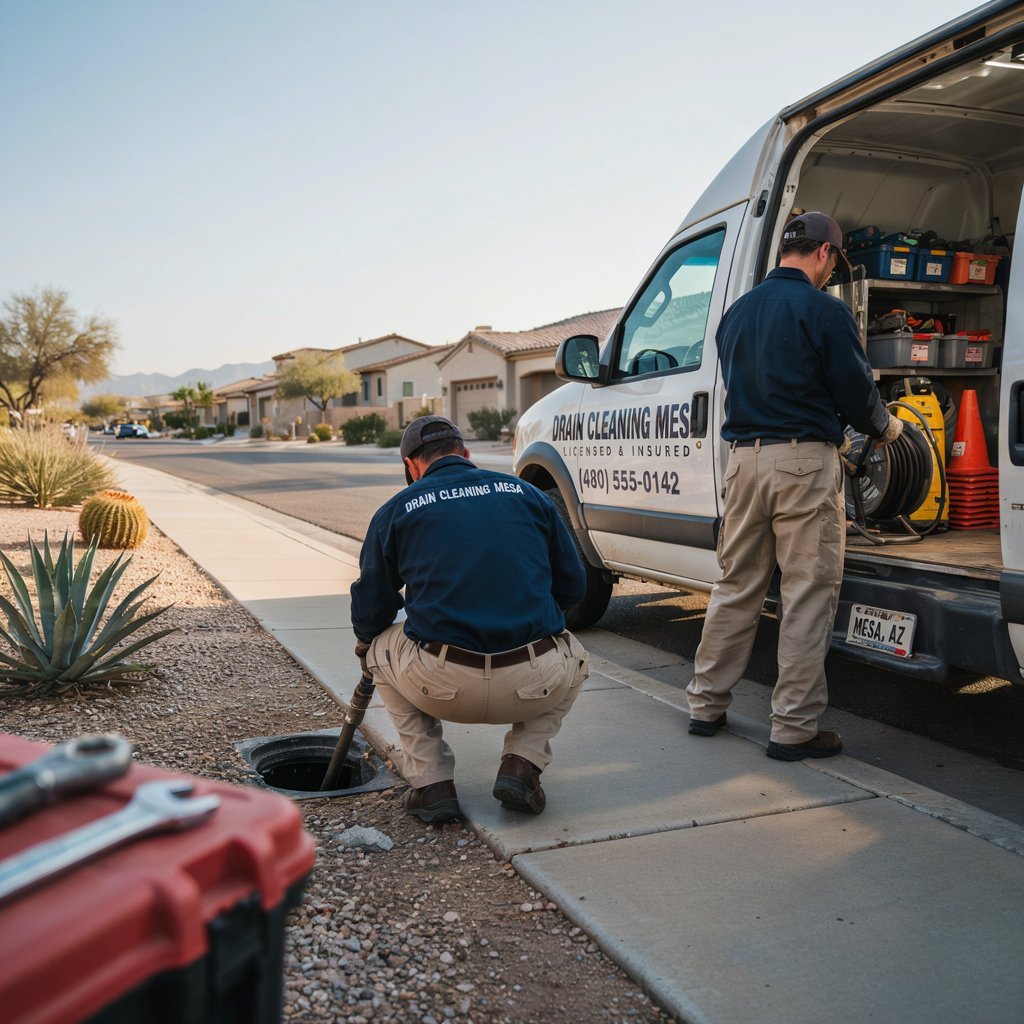
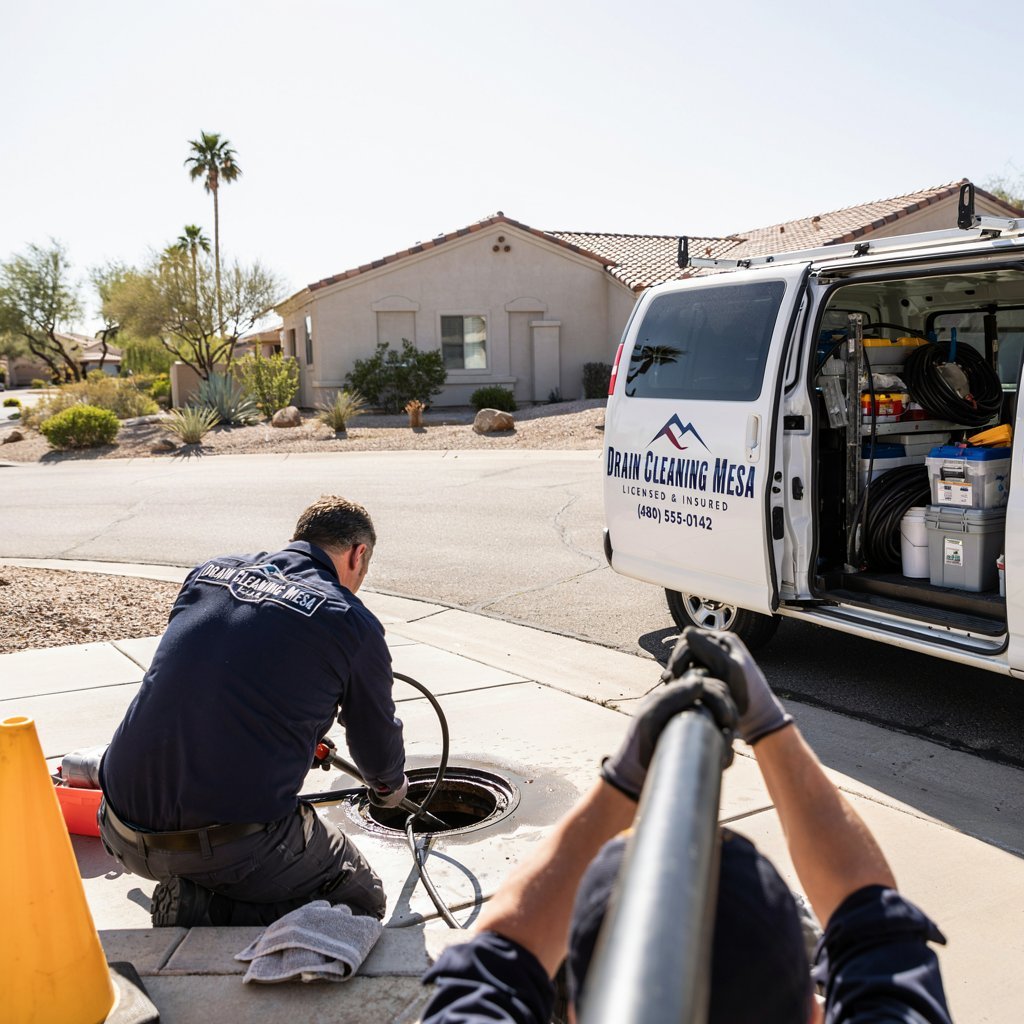
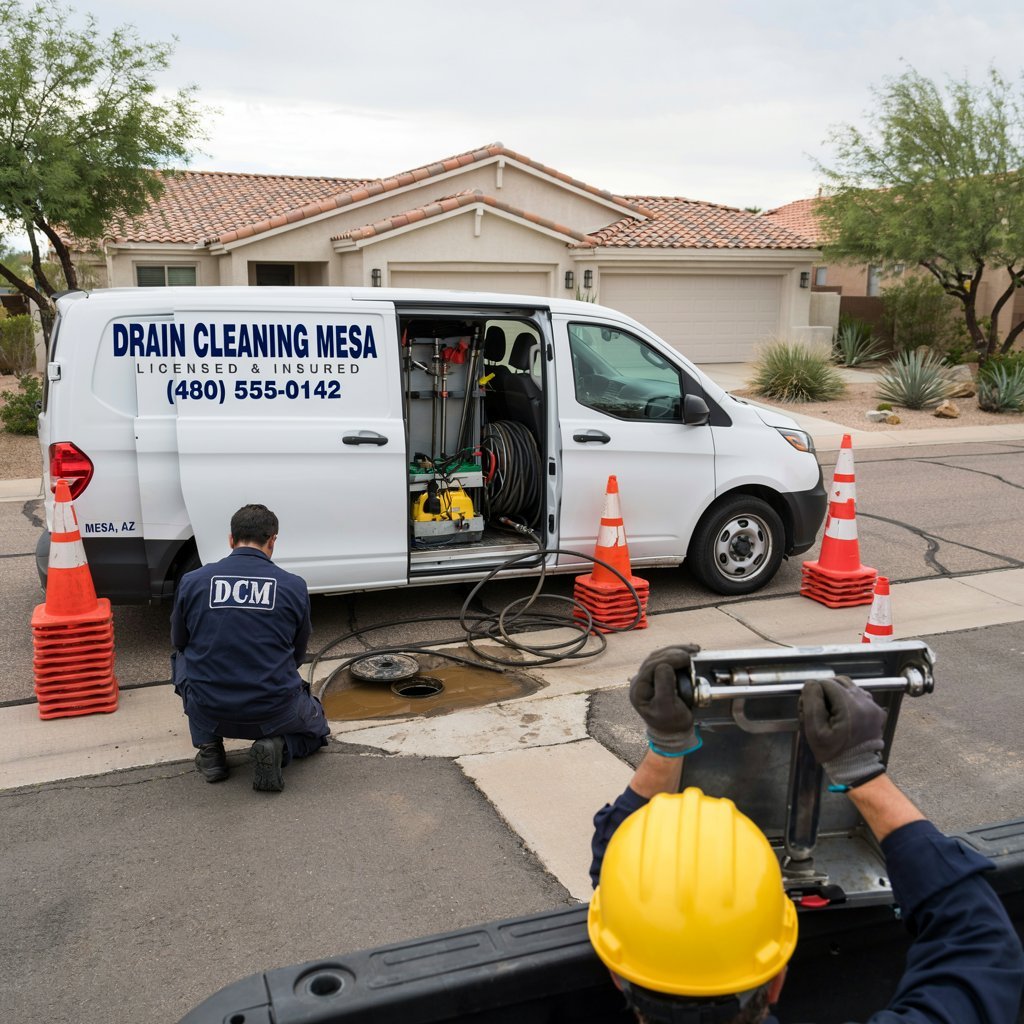
What Causes Commercial Drain Problems in Mesa
Grease and Food Service Volume
Restaurants and food service businesses throughout Mesa — from Downtown Mesa’s dining corridor to the retail centers around Superstition Springs — push far more grease and food waste through their drains than any residential kitchen. Without a properly maintained grease trap or interceptor, that volume builds up fast and backs up the entire kitchen line.
Monsoon Runoff and Storm Drainage
Mesa’s summer monsoon season sends heavy, sudden rainfall across parking lots, loading docks, and commercial yards. Storm drains and catch basins that aren’t cleared of sediment and debris beforehand can’t move that volume of water fast enough, leading to pooling near entrances and, in some cases, water intrusion into the building itself.
Root Intrusion in Older Commercial Lines
Commercial properties near established parts of the city, including sites along Main Street and older stretches of Southern Avenue, often have mature landscaping with root systems that have had decades to reach toward sewer and drain lines. Left unaddressed, root intrusion narrows the line gradually until a full blockage forces an emergency call.
Sediment and Debris in Industrial Drainage
Auto shops, car washes, and industrial sites near Falcon Field and the Mesa Gateway area generate sand, grit, and debris that standard residential drains were never designed to handle. Without sand traps and catch basins cleaned on a regular schedule, this material settles into the line and restricts flow over time.
Deferred Maintenance Across Multi-Tenant Properties
Retail centers and multi-tenant properties often have shared drainage systems where one tenant’s neglected grease trap or a poorly maintained catch basin affects the whole property. Without a consistent maintenance schedule, these shared systems tend to fail at the worst possible time — during business hours, not after.
Our Commercial Drain Cleaning Process
Step 1 — Assess the System
We start by identifying which part of the commercial drainage system is affected, whether that’s a single grease trap, a storm drain network, or a shared sewer main serving multiple tenants.
Step 2 — Inspect With a Camera
For sewer mains, septic lines, and recurring issues, we run a camera inspection to confirm the exact cause and location of the problem before recommending a fix.
Step 3 — Match the Method to the Volume
Commercial-scale problems call for commercial-scale equipment. We use hydro jetting, jet vacuuming, or trenchless clearing methods depending on what the line actually needs, not a scaled-up residential approach.
Step 4 — Clear and Verify
We fully clear the blockage or buildup and test the system under real flow conditions to confirm the fix holds, rather than just pushing debris further down the line.
Step 5 — Recommend a Maintenance Schedule
Most commercial drain issues are preventable with regular service. We outline a maintenance schedule suited to your property type, whether that’s a quarterly grease trap pump-out or a pre-monsoon storm drain check.
Customer Testimonials
Cleaning vs. Repair: Knowing the Difference
Commercial drain cleaning clears blockages, buildup, sediment, and grease from an otherwise sound system. It won’t fix a collapsed sewer line, a cracked catch basin, or a failed backflow device, which show up more often in older commercial buildings around Central Mesa. If a camera inspection turns up physical damage rather than buildup, we’ll walk you through repair or trenchless replacement options instead of cleaning a damaged line repeatedly with no lasting result.
Cost of Commercial Drain Cleaning in Mesa
Commercial pricing depends on the system involved, how often it’s been maintained, and whether the job calls for standard cabling, hydro jetting, or jet vacuuming equipment. A single grease trap service is a different scope than clearing a storm drain network across a multi-tenant property. We inspect the system first and provide a clear price before work begins, along with maintenance plan options for properties that need ongoing service.
Why Mesa Businesses Trust Us With Their Drains
Commercial properties across Mesa carry different demands depending on what they are — a restaurant kitchen near Downtown Mesa, a retail center by Superstition Springs, or an industrial site near Falcon Field all put different stress on their drainage systems. We treat each property based on its actual use, volume, and line condition rather than applying the same approach to every commercial job, and we work around business hours to keep disruption to a minimum.
Services We Provide
Residential
✅Clogged Drain Repair
✅Drain Snaking
✅Hydro Jetting
✅Video Camera Drain Inspection
✅Sewer Line Cleaning
✅Bathroom Drain Cleaning
✅Kitchen Drain Cleaning
✅Toilet Drain Cleaning
✅Laundry Drain Cleaning
✅Basement Drain Cleaning
✅Roof Drain Cleaning
✅Downspout Drain Cleaning
✅Preventative Drain Maintenance
✅Drain Odor Diagnosis and Removal
✅Slow Drain Diagnosis and Repair
✅Vent Stack Cleaning
✅Water Leak Detection
✅Main Line Cleaning
✅Floor Drain Cleaning
Frequently Asked Questions
How often should a commercial grease trap be cleaned?
Most food service operations need their grease trap serviced every one to three months depending on kitchen volume, though busier locations may need more frequent pump-outs to avoid backups.
What should we do if our parking lot floods during monsoon season?
Standing water after a storm usually points to a blocked catch basin or storm drain rather than a drainage design issue. Clearing the sediment and debris first often resolves flooding that seemed like a bigger problem.
Can drain cleaning be done without closing the business?
In most cases, yes. We schedule commercial work around business hours and use methods like trenchless clearing that don’t require digging up parking lots or closing off customer areas.
How is commercial drain cleaning different from residential?
Commercial systems handle far higher volume and often include equipment residential properties don’t have, like grease interceptors, catch basins, and backflow preventers, all of which need different tools and schedules to maintain properly.
What happens if we skip regular catch basin or grease trap maintenance?
Buildup that isn’t cleared on schedule leads to backups, flooding, or health code issues, usually at the least convenient time. Regular maintenance is almost always less disruptive and less costly than an emergency call.
Do older commercial buildings need drain cleaning more often?
Often yes. Aging pipe materials and mature landscaping near older commercial properties, particularly around Main Street and Central Mesa, are more prone to root intrusion and interior corrosion, which can mean more frequent service.