Grease Interceptor Cleaning in Mesa, AZ
A full grease interceptor can cause slow kitchen drains, strong odors, floor-drain backups, and grease buildup inside connected sewer lines. Larger than an indoor grease trap, an interceptor collects fats, oils, grease, food solids, and wastewater from commercial kitchens before they enter the municipal drainage system.
Our Mesa, Arizona service team provides grease interceptor cleaning for restaurants, hotels, cafeterias, grocery stores, schools, food-production facilities, and other commercial properties. We remove accumulated grease and sludge, inspect accessible components, and check the inlet and outlet lines for restrictions.
Signs Your Grease Interceptor Needs Cleaning
Common signs include slow sinks, gurgling kitchen drains, grease odors outside the building, wastewater backing up through floor drains, and grease appearing around the interceptor lid.
The interceptor may also need service when it fills faster than expected or kitchen drainage becomes worse during busy hours.
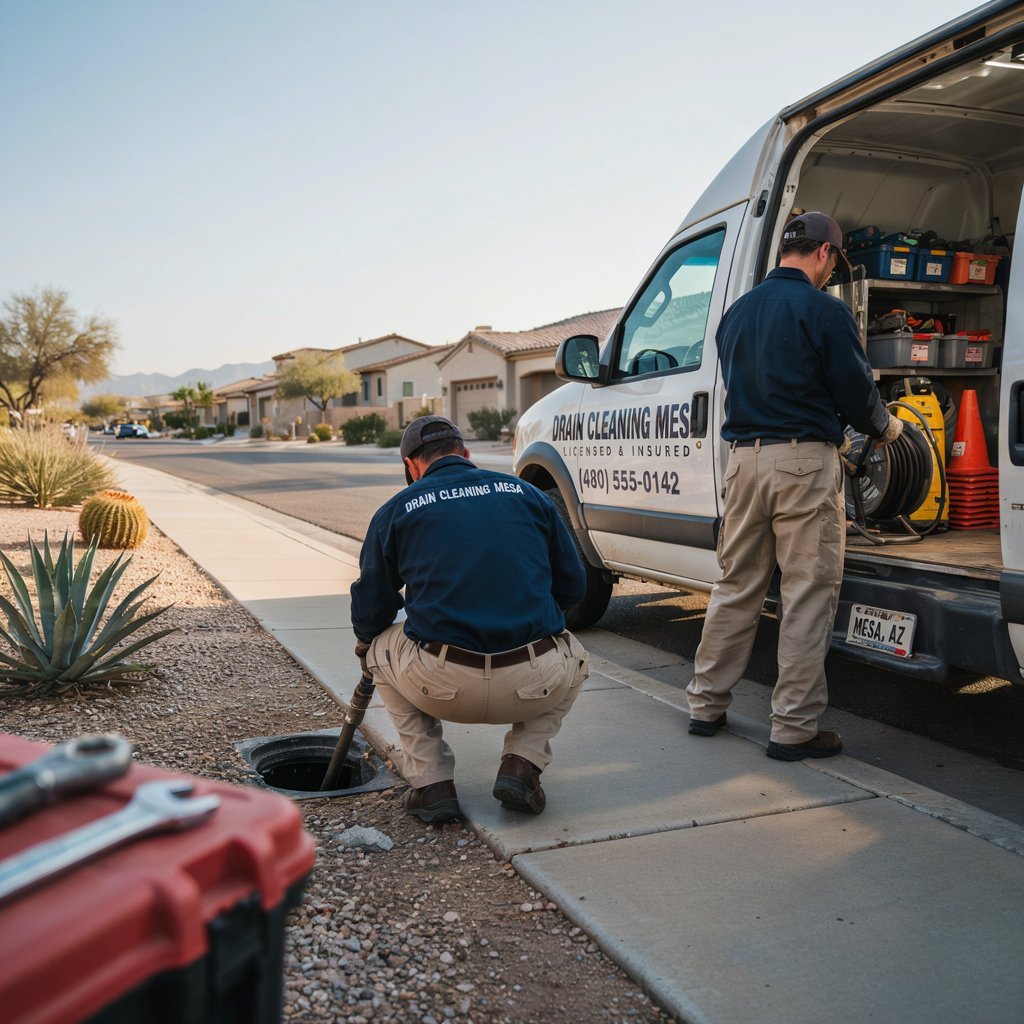
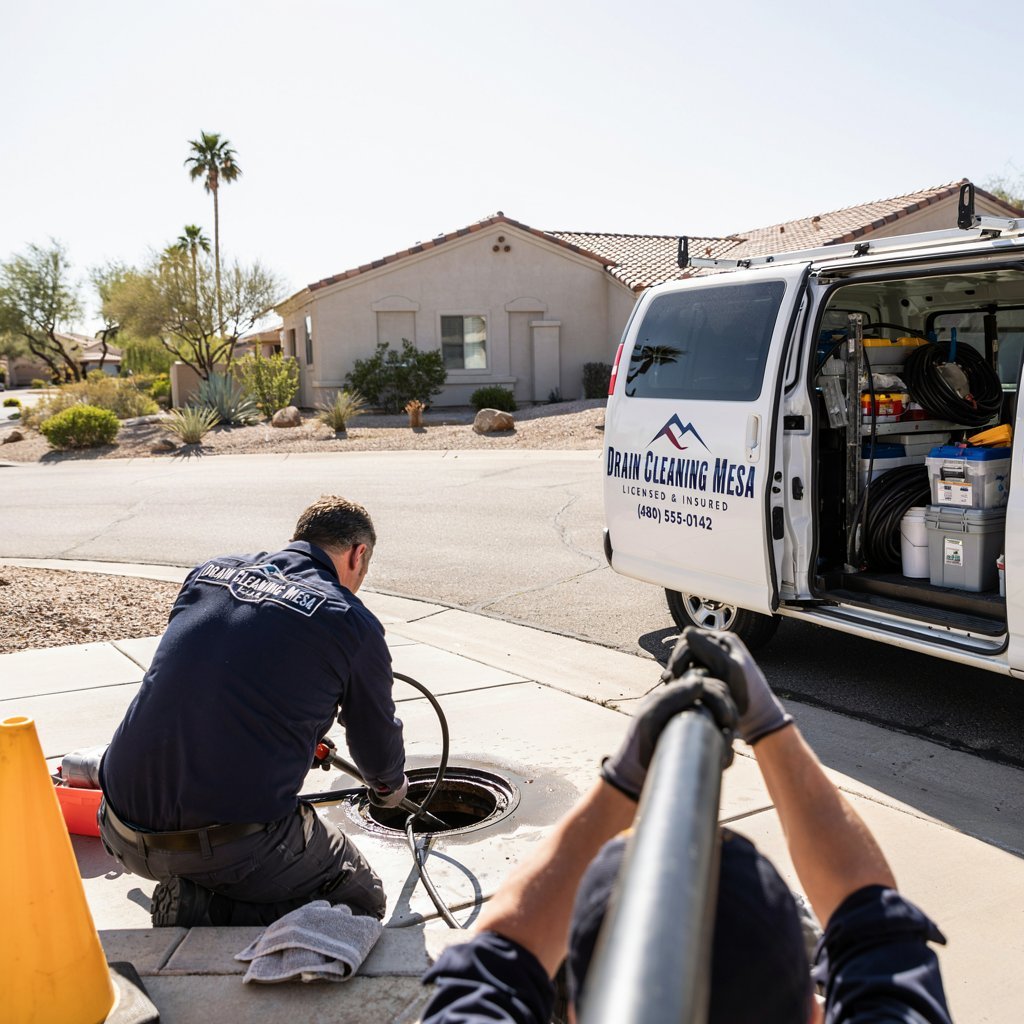
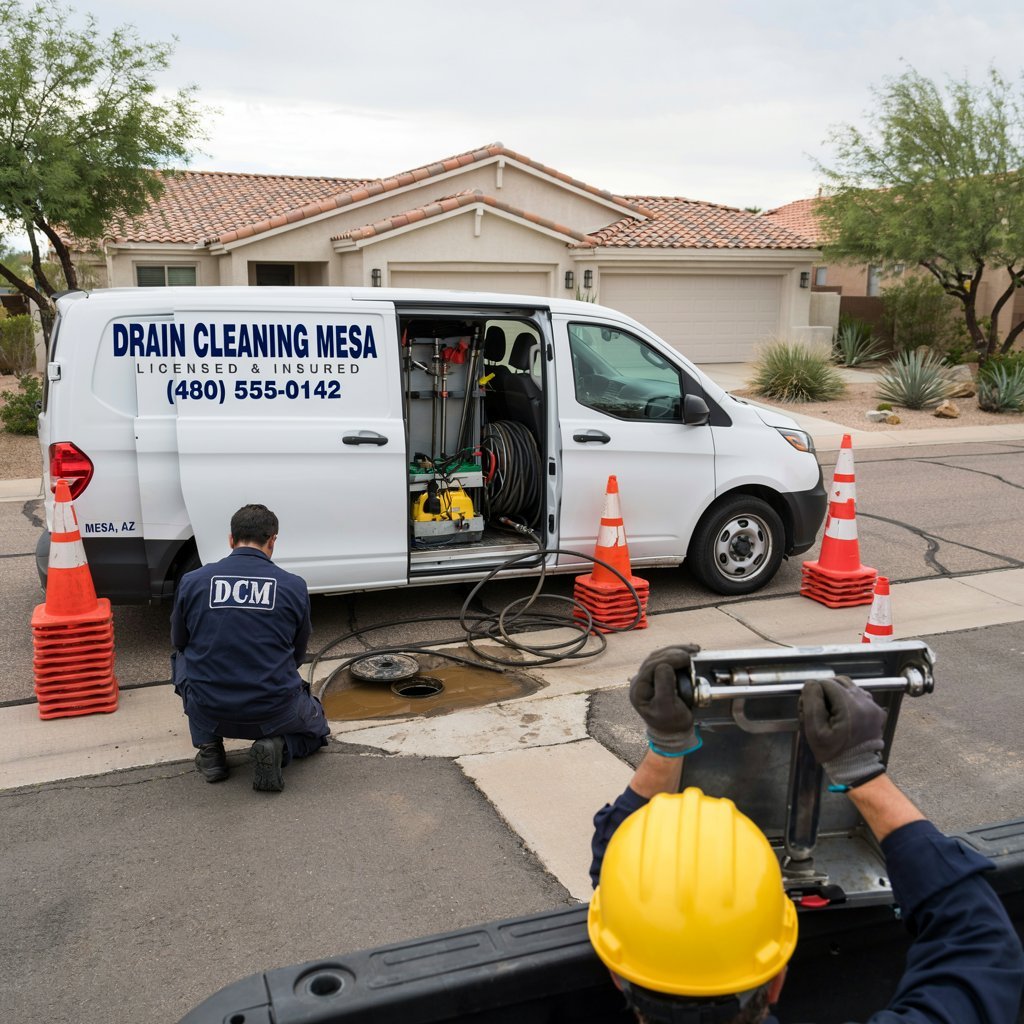

What Causes Grease Interceptor Problems in Mesa Businesses
Heavy Fats, Oils, and Grease Buildup
Cooking oil, meat fat, sauces, dairy products, and fryer waste can create thick grease layers inside the interceptor.
Food Solids and Sludge
Rice, flour, coffee grounds, produce scraps, and other food particles settle at the bottom and reduce the unit’s available capacity.
Delayed Cleaning
When service is postponed, grease and solids may enter the outlet line and create a blockage farther inside the plumbing system.
High-Volume Kitchen Use
Busy restaurants around Downtown Mesa, Mesa Riverview, Superstition Springs, and Power Road may fill interceptors quickly during peak service periods.
Our Grease Interceptor Cleaning Process
Step 1 — Inspect the Interceptor
We check the access covers, grease level, wastewater depth, surrounding area, and visible signs of overflow or damage.
Step 2 — Remove Grease and Wastewater
Accumulated fats, oils, grease, wastewater, and floating debris are removed from the interceptor.
Step 3 — Extract Settled Solids
Heavy food waste and sludge are removed from the bottom of the unit.
Step 4 — Check the Inlet and Outlet
Accessible baffles, tees, inlet pipes, and outlet lines are inspected for buildup or restricted flow.
Step 5 — Recommend a Service Schedule
We explain the interceptor’s condition and suggest a cleaning frequency based on its size and the kitchen’s daily volume.
Customer Testimonials
Grease Interceptor vs. Grease Trap: Knowing the Difference
A grease trap is usually a smaller unit installed near kitchen fixtures. A grease interceptor is generally larger, often located outside or underground, and serves multiple drains in a commercial kitchen.
Both devices separate grease from wastewater, but interceptors hold more material and typically require professional removal equipment.
Cost of Grease Interceptor Cleaning in Mesa
The cost depends on the interceptor’s size, location, accessibility, grease depth, sludge level, and cleaning frequency.
An interceptor that receives regular service is generally easier to clean than one containing hardened grease or a blocked outlet line. Pricing is provided before work begins.
Why Mesa Businesses Trust Our Grease Interceptor Cleaning
Routine cleaning helps reduce kitchen backups, grease odors, emergency closures, and blockages inside commercial sewer lines. It also gives property managers a clearer understanding of how quickly the interceptor fills.
We serve commercial properties throughout Mesa, including Dana Park, Downtown Mesa, Mesa Riverview, Fiesta District, Falcon Field, Superstition Springs, Eastmark, and areas near Baseline Road, Power Road, and Southern Avenue.
Services We Provide
Residential
✅Clogged Drain Repair
✅Drain Snaking
✅Hydro Jetting
✅Video Camera Drain Inspection
✅Sewer Line Cleaning
✅Bathroom Drain Cleaning
✅Kitchen Drain Cleaning
✅Toilet Drain Cleaning
✅Laundry Drain Cleaning
✅Basement Drain Cleaning
✅Roof Drain Cleaning
✅Downspout Drain Cleaning
✅Preventative Drain Maintenance
✅Drain Odor Diagnosis and Removal
✅Slow Drain Diagnosis and Repair
✅Vent Stack Cleaning
✅Water Leak Detection
✅Main Line Cleaning
✅Floor Drain Cleaning
Frequently Asked Questions
How often should a grease interceptor be cleaned?
The schedule depends on interceptor size, kitchen volume, menu, and grease production. High-volume kitchens usually need more frequent service.
What happens when an interceptor is full?
Kitchen drains may slow down, odors may develop, and wastewater can back up through sinks or floor drains.
Why does grease appear around the lid?
The interceptor may be overfilled, blocked, damaged, or receiving more wastewater than it can handle.
Can a full interceptor clog the sewer line?
Yes. Grease and solids can pass through the outlet and harden inside the connected drain or sewer pipe.
Is an interceptor the same as a septic tank?
No. A grease interceptor separates kitchen grease and solids, while a septic tank receives wastewater from an entire private septic system.
Do you inspect the outlet line?
Yes. Accessible inlet and outlet connections are checked, and additional drain cleaning may be recommended when flow remains restricted.