Grease Trap Cleaning in Mesa, AZ
A full or clogged grease trap can cause slow kitchen drains, strong odors, wastewater backups, and sanitation problems. Grease, fats, oils, food particles, and sludge collect inside the trap and must be removed before they enter the building’s drain lines.
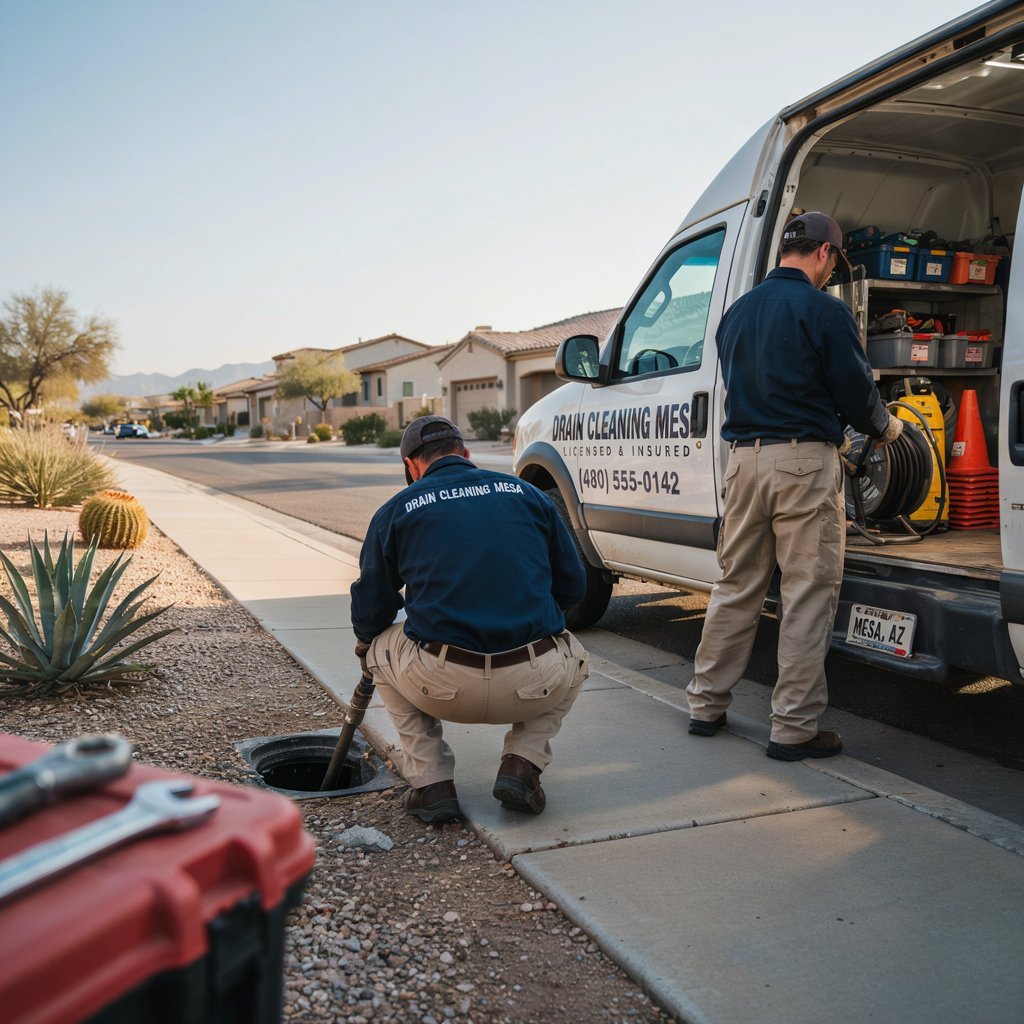
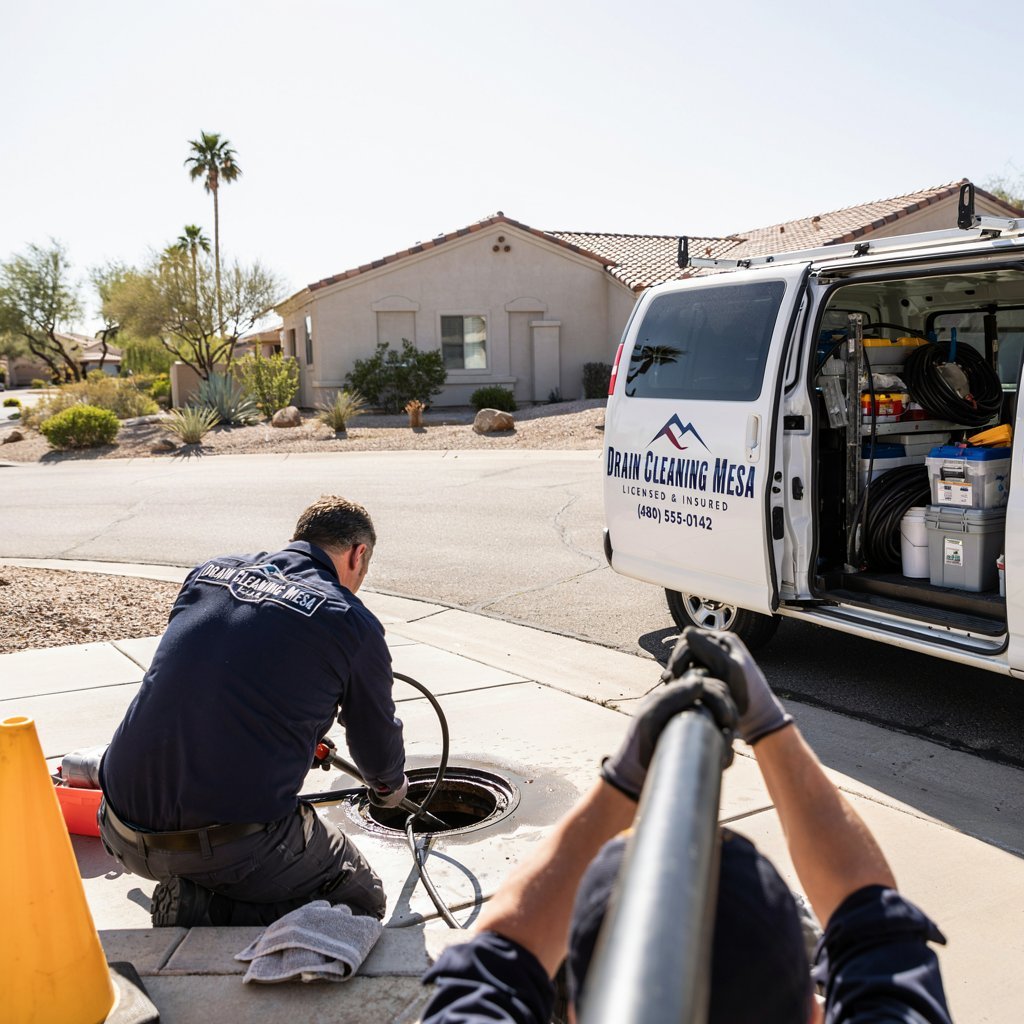
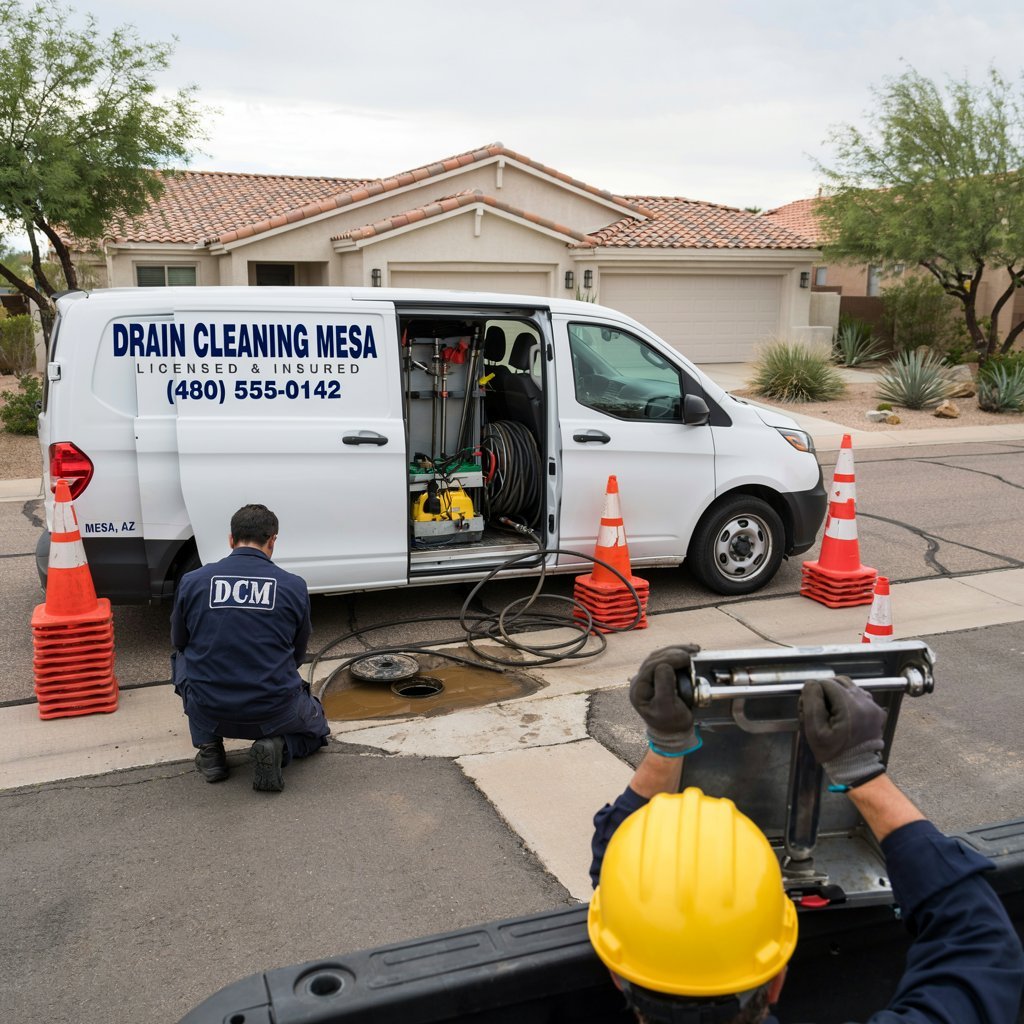
Drain Cleaning Mesa provides grease trap cleaning for restaurants, cafés, bakeries, food courts, schools, hotels, commercial kitchens, and other food-service properties. We remove accumulated grease and solids, clean the trap components, and check the connected drain lines for restrictions.
Signs Your Grease Trap Needs Cleaning
Common warning signs include slow kitchen sinks, unpleasant odors, gurgling drains, grease around the trap lid, and wastewater backing up through floor drains.
You may also notice that the trap fills faster than usual or that odors become stronger during busy kitchen hours. These problems often mean grease and food solids are taking up too much space inside the unit.
What Causes Grease Trap Problems in Mesa Businesses
Fats, Oils, and Grease
Cooking oil, meat fat, butter, sauces, and dairy products cool inside the trap and form thick layers that reduce its working capacity.
Food Particles and Sludge
Rice, flour, coffee grounds, vegetable scraps, and other food waste settle at the bottom of the trap and create dense sludge.
Infrequent Cleaning
A grease trap that is not serviced regularly can overflow or allow grease to move into the building’s drain and sewer lines.
Heavy Kitchen Use
Busy restaurants near Downtown Mesa, Superstition Springs, Mesa Riverview, and the Fiesta District may fill grease traps quickly during peak operating hours.
Our Grease Trap Cleaning Process
Step 1 — Inspect the Grease Trap
We check the trap size, grease level, access point, surrounding drains, and signs of leakage or overflow.
Step 2 — Remove Grease and Solids
Accumulated grease, wastewater, and settled food solids are removed from the trap.
Step 3 — Clean the Trap Interior
The walls, baffles, lid, and accessible components are cleaned to remove remaining residue and buildup.
Step 4 — Check the Drainage
The inlet and outlet are inspected to confirm that wastewater can move through the trap without backing up.
Step 5 — Recommend a Cleaning Schedule
We explain the trap’s condition and suggest a service frequency based on kitchen volume, trap size, and grease production.
Customer Testimonials
Grease Trap Clog vs. Kitchen Drain Clog: Knowing the Difference
A kitchen drain clog may affect one sink or branch line. A grease trap problem can slow several kitchen fixtures and may cause wastewater to return through nearby floor drains.
Checking both the trap and connected drain lines helps determine whether cleaning the trap alone will restore proper flow.
Cost of Grease Trap Cleaning in Mesa
The cost depends on the grease trap’s size, location, condition, accessibility, and amount of waste inside it.
Smaller indoor traps are generally easier to service than large exterior interceptors containing heavy grease and sludge. Additional drain cleaning may be required when grease has already entered the outlet line. Pricing is provided before work begins.
Why Mesa Businesses Trust Our Grease Trap Cleaning
Routine grease trap cleaning helps reduce odors, backups, emergency closures, and grease buildup inside commercial drain lines. It also helps kitchen staff maintain a cleaner and more dependable working environment.
We serve commercial properties throughout Mesa, including Downtown Mesa, Mesa Riverview, Fiesta District, Superstition Springs, Falcon Field, Eastmark, Dobson Ranch, and areas near Power Road, Southern Avenue, and Main Street.
Services We Provide
Residential
✅Clogged Drain Repair
✅Drain Snaking
✅Hydro Jetting
✅Video Camera Drain Inspection
✅Sewer Line Cleaning
✅Bathroom Drain Cleaning
✅Kitchen Drain Cleaning
✅Toilet Drain Cleaning
✅Laundry Drain Cleaning
✅Basement Drain Cleaning
✅Roof Drain Cleaning
✅Downspout Drain Cleaning
✅Preventative Drain Maintenance
✅Drain Odor Diagnosis and Removal
✅Slow Drain Diagnosis and Repair
✅Vent Stack Cleaning
✅Water Leak Detection
✅Main Line Cleaning
✅Floor Drain Cleaning
Frequently Asked Questions
What is grease trap cleaning?
Grease trap cleaning removes fats, oils, grease, food solids, and sludge that collect inside a commercial kitchen grease trap or interceptor.
How often should a grease trap be cleaned?
The correct schedule depends on trap size and kitchen volume. Busy restaurants may need service more frequently than cafés or lower-volume commercial kitchens.
What happens when a grease trap is full?
A full trap may cause odors, slow drains, wastewater backups, grease leakage, and buildup inside connected pipes.
Why does my grease trap smell?
Odors usually come from decomposing food solids, old grease, standing wastewater, or a trap that is overdue for cleaning.
Can grease block the kitchen drain line?
Yes. Grease can pass beyond an overloaded trap, cool inside the drainpipe, and create a difficult blockage.
Do you clean outdoor grease interceptors?
Yes. Service is available for indoor grease traps and larger exterior interceptors, depending on access and system design.