Video Camera Drain Inspection in Mesa, AZ
Recurring clogs, unexplained drain odors, and slow-moving fixtures often indicate a problem deeper inside the plumbing system. Without seeing inside the pipe, it can be difficult to tell whether the cause is grease buildup, tree roots, damaged plumbing, or an object lodged in the line.
Mesa’s local drain cleaning company uses waterproof video cameras to inspect drain and sewer lines without unnecessary digging or guesswork. The camera provides a live view of the pipe interior, helping locate blockages, damaged joints, corrosion, and other problems before the correct service is recommended.
Signs You Need a Drain Camera Inspection
A camera inspection may be needed when the same drain keeps clogging, several fixtures drain slowly, or sewer odors return after cleaning. It is also useful when water backs up without an obvious cause or a technician repeatedly encounters resistance in the same part of the line.
Mesa homeowners may also request an inspection before purchasing an older property. This can reveal hidden sewer-line issues that may not appear during a standard home inspection.
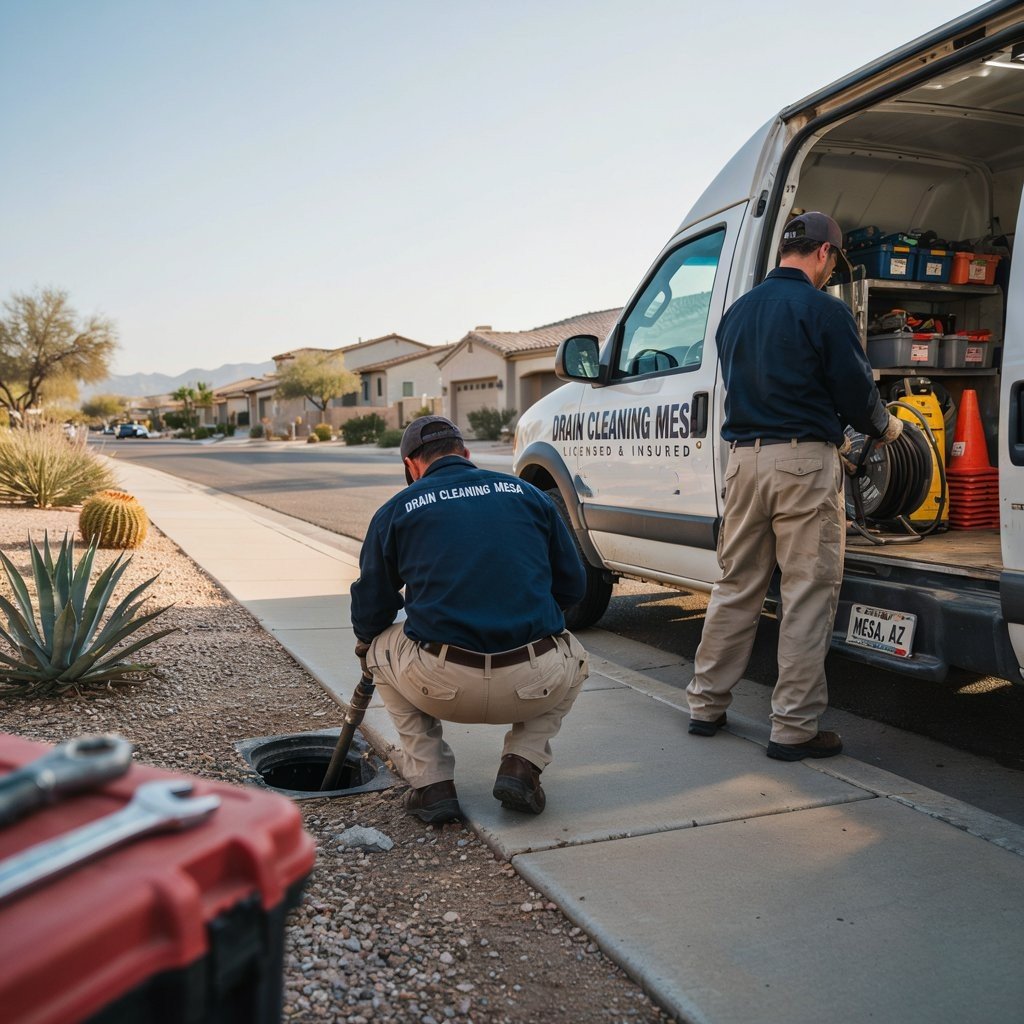
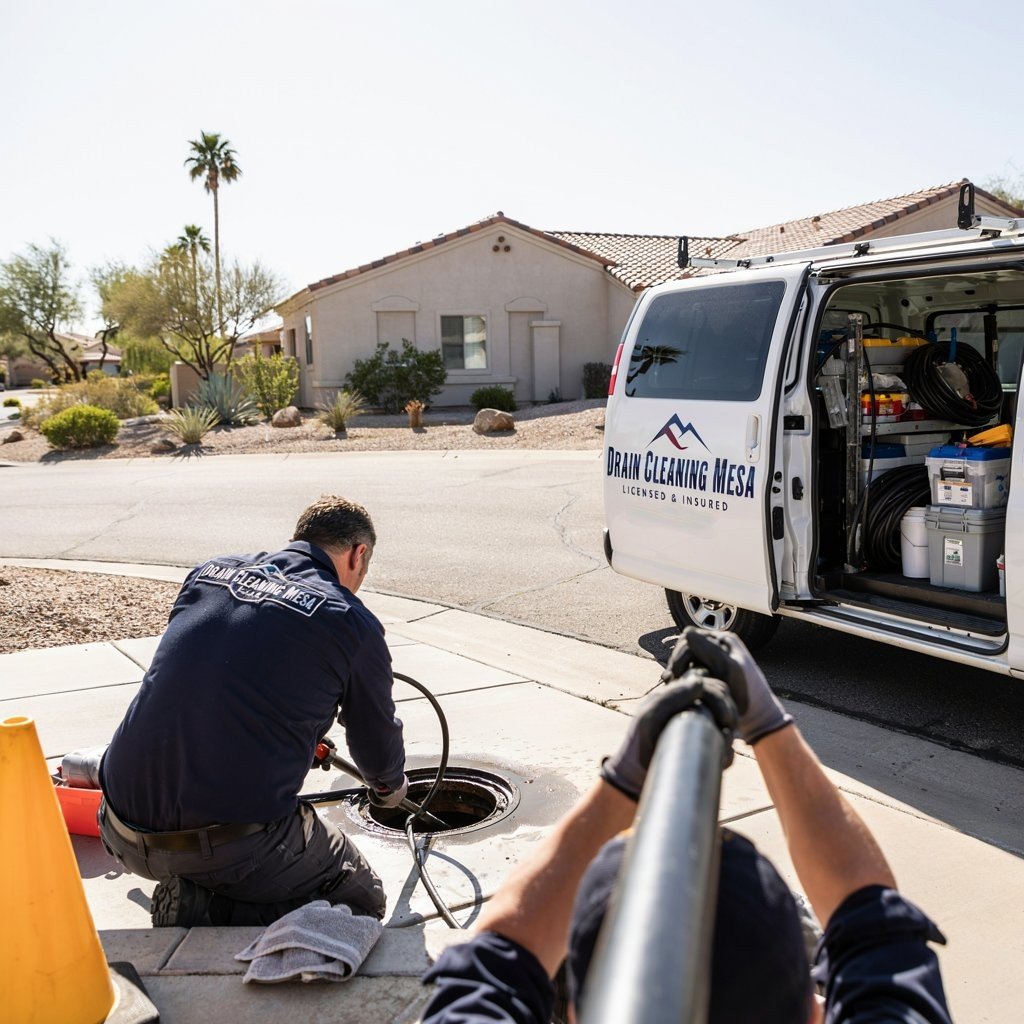
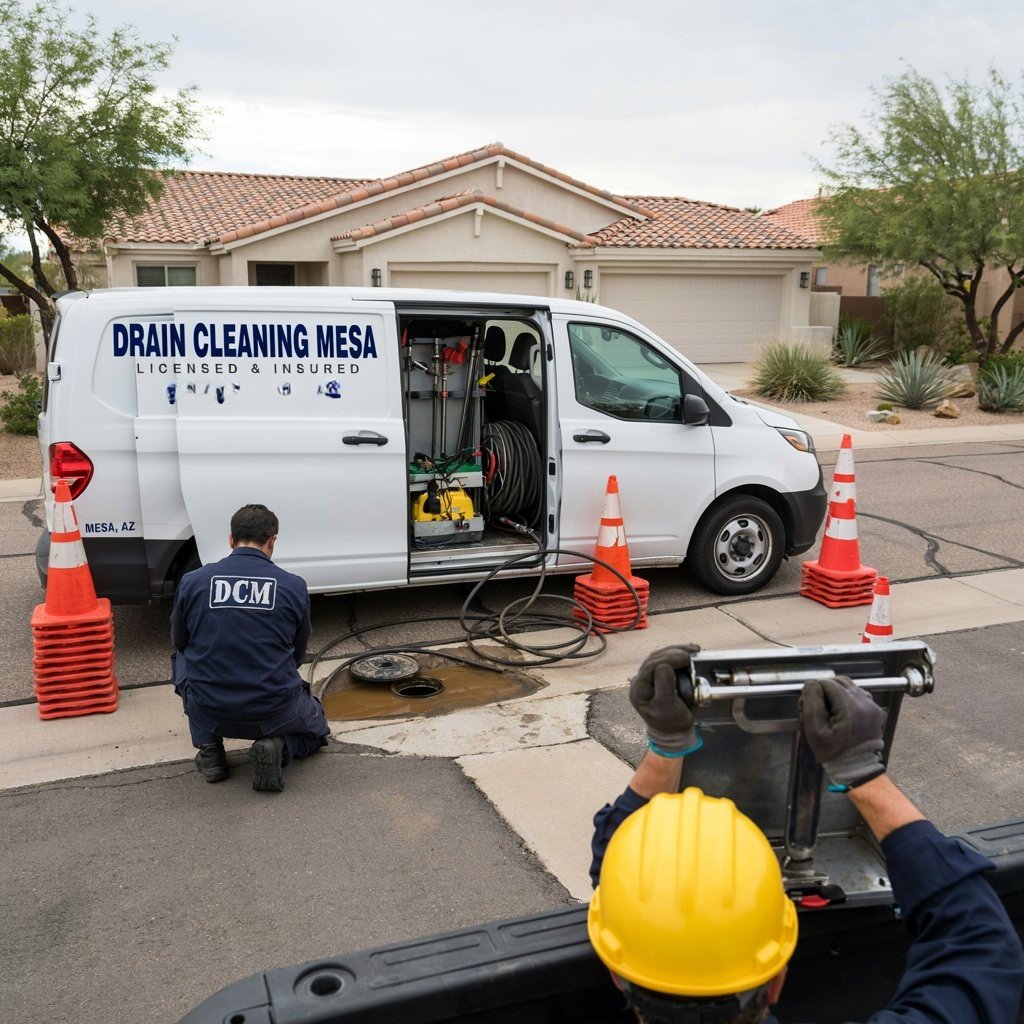
What Drain Cameras Can Find in Mesa Homes
Tree Root Intrusion
Roots can enter sewer pipes through small cracks and loose joints. A drain camera shows where the roots entered, how much of the pipe is affected, and whether cleaning or repair is necessary.
Grease and Debris Buildup
Grease, soap residue, paper, and other debris can gradually narrow a drainpipe. Camera footage helps determine whether the line has one concentrated clog or buildup along a larger section.
Cracked or Separated Pipes
Older clay and cast-iron lines found around Downtown Mesa, West Mesa, and neighborhoods near Main Street may crack, corrode, or separate at their joints. A camera can identify the damaged section without excavating the entire line.
Pipe Bellies and Foreign Objects
A low section of pipe can collect standing water and waste, causing repeated backups. Cameras can also locate toys, wipes, construction debris, and other objects that ordinary drain cleaning may not remove.
Our Video Camera Drain Inspection Process
Step 1 — Evaluate the Symptoms
We review which drains are affected, how often the problem occurs, and whether previous cleaning provided only temporary relief.
Step 2 — Access the Drain Line
The camera is inserted through an appropriate cleanout or drain opening. The access point depends on the pipe being inspected and the location of the symptoms.
Step 3 — Inspect the Pipe Interior
A flexible cable carries the waterproof camera through the line. The technician watches live footage while looking for buildup, roots, cracks, offsets, and standing water.
Step 4 — Locate the Problem
The camera equipment helps determine the location of the obstruction or damaged section. This allows cleaning or repair work to focus on the affected area.
Step 5 — Explain the Findings
We explain what the inspection revealed and recommend the appropriate next step, whether that is drain snaking, hydro jetting, routine cleaning, or pipe repair.
Customer Testimonials
Inspection vs. Guesswork: Knowing the Difference
Drain cleaning may restore water flow, but it does not always explain why the blockage occurred. A video inspection allows the technician to see whether the problem is ordinary buildup or a damaged pipe that will continue causing backups.
This helps avoid repeatedly cleaning a line when repair is actually needed. It also prevents unnecessary excavation when the pipe is structurally sound and only requires cleaning.
Cost of Video Camera Drain Inspection in Mesa
The cost depends on the length of the line, the available access point, and how difficult it is to move the camera through the plumbing. A short residential branch line is usually easier to inspect than a long main sewer line with heavy buildup or standing water.
We provide pricing before the inspection begins and explain whether additional cleaning is needed to obtain a clear view.
Why Mesa Homeowners Trust Our Drain Inspections
Accurate diagnosis is especially important in Mesa, where plumbing systems range from older clay and cast-iron lines near the city center to newer PVC systems in Eastmark, Cadence, Las Sendas, and other developing communities.
A camera inspection helps identify the actual condition of the pipe before cleaning or repair begins. This allows homeowners to make informed decisions instead of paying for repeated temporary solutions.
Services We Provide
Residential
✅Clogged Drain Repair
✅Drain Snaking
✅Hydro Jetting
✅Video Camera Drain Inspection
✅Sewer Line Cleaning
✅Bathroom Drain Cleaning
✅Kitchen Drain Cleaning
✅Toilet Drain Cleaning
✅Laundry Drain Cleaning
✅Basement Drain Cleaning
✅Roof Drain Cleaning
✅Downspout Drain Cleaning
✅Preventative Drain Maintenance
✅Drain Odor Diagnosis and Removal
✅Slow Drain Diagnosis and Repair
✅Vent Stack Cleaning
✅Water Leak Detection
✅Main Line Cleaning
✅Floor Drain Cleaning
Frequently Asked Questions
What is a video camera drain inspection?
It is a plumbing inspection performed with a small waterproof camera attached to a flexible cable. The camera sends live footage from inside the drain or sewer line to a monitor.
When should I schedule a drain camera inspection?
An inspection is recommended for recurring clogs, multiple slow drains, unexplained sewer odors, suspected tree roots, or backups that return after cleaning.
Can a camera see through standing water?
The camera may pass through some water, but heavy buildup or a completely blocked line can limit visibility. The drain may need to be cleared before a complete inspection can be performed.
Can a camera locate the exact problem area?
Yes. Professional camera equipment can help determine where a blockage, crack, separated joint, or other issue is located within the line.
Does a drain camera clear the clog?
No. The camera identifies the condition and location of the problem. Drain snaking, hydro jetting, or another service is then used to clear the blockage.
Should I inspect a sewer line before buying a home?
A sewer camera inspection can be valuable when purchasing an older Mesa property or a home with mature trees nearby. It may reveal roots, cracks, corrosion, or other issues not covered by a standard home inspection.