Drain Snaking in Mesa, AZ
A slow drain can quickly turn into standing water, unpleasant odors, or a complete backup at the worst possible time. You may notice the kitchen sink taking longer to empty, water collecting around your feet in the shower, or a toilet that keeps clogging even after repeated plunging. These problems often mean that hair, grease, soap residue, food waste, or another obstruction has formed inside the drainpipe.
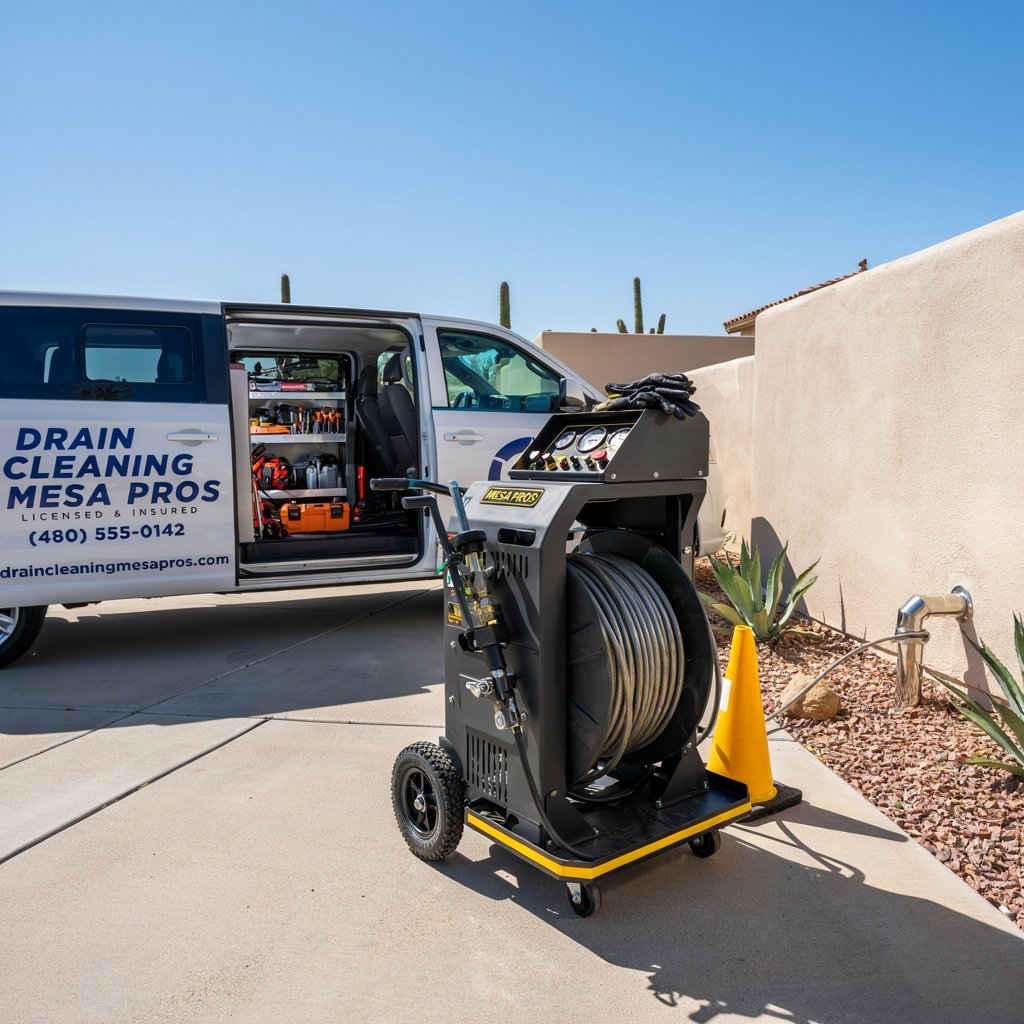
Our team at Drain Cleaning Mesa provides professional drain snaking for homes and businesses throughout Mesa. A plumbing snake, sometimes called a drain cable or drain auger, is guided through the affected pipe to break apart or retrieve the material blocking the flow. This method is especially effective for localized clogs that are too deep or compacted for a household plunger but do not require more intensive pipe cleaning.
Before beginning, the technician evaluates which fixture is affected, how often the problem occurs, and whether the symptoms point to a single drain or a larger sewer-line issue. This helps ensure that drain snaking is the right solution rather than forcing a cable into a pipe with an underlying structural problem.
Signs You Need Professional Drain Snaking
A drain that empties slowly is often the first warning that material is accumulating inside the pipe. Water may still pass through at first, but the opening becomes narrower as hair, soap residue, grease, or debris collects around the obstruction. Eventually, the drain may stop flowing entirely.
Other signs include bubbling sounds after water drains, recurring clogs in the same fixture, unpleasant odors coming from the drain, or water rising in a sink or shower before slowly disappearing. Mesa homeowners may also notice a clog returning shortly after using a chemical drain cleaner. That usually means the product only opened a small passage through the blockage instead of removing the material that caused it.
When only one sink, tub, shower, or toilet is affected, the obstruction is often located in that fixture’s branch line and may be a good candidate for drain snaking. When several fixtures back up together, the problem may be farther down the plumbing system and should be diagnosed before any cleaning method is selected.
What Causes Drain Clogs in Mesa Homes?
Hair and Soap Residue
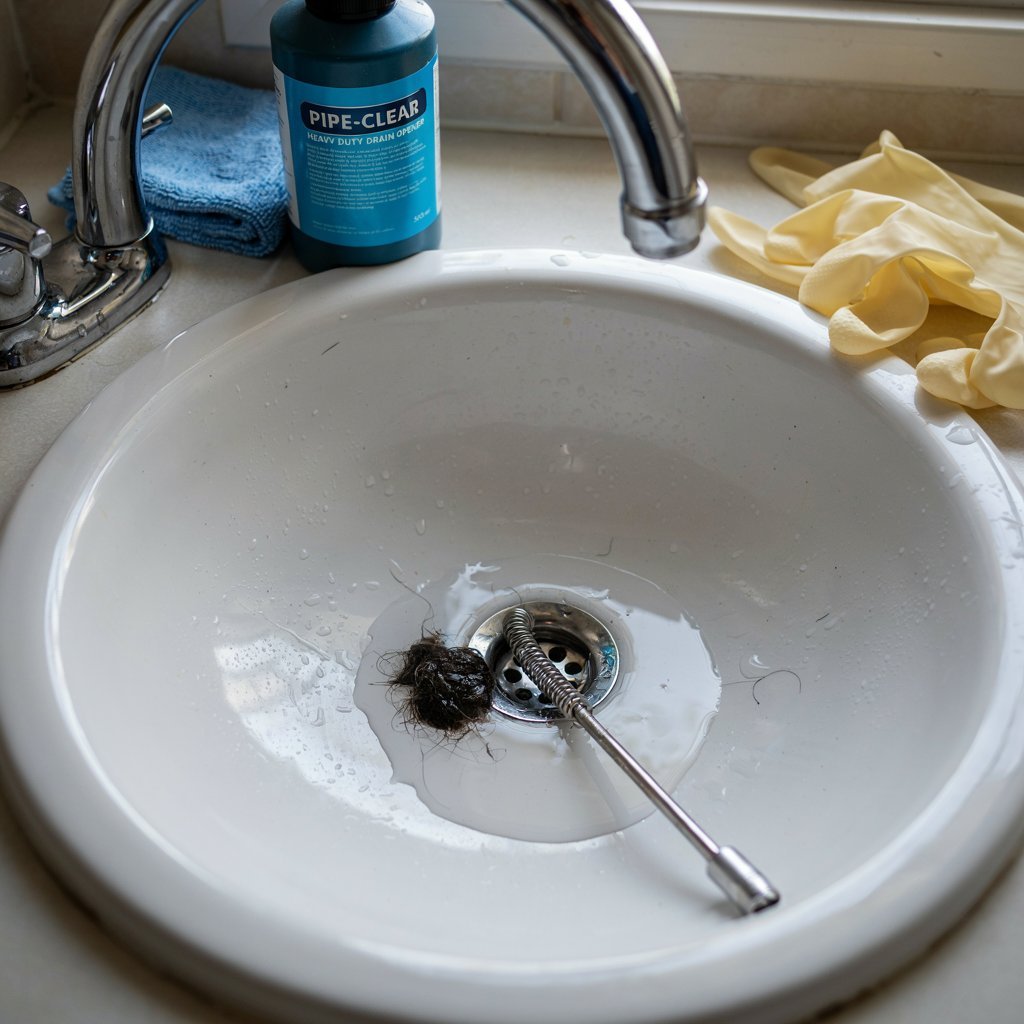
Bathroom drains commonly become restricted when hair combines with soap residue, shaving products, toothpaste, and other personal-care materials. The mixture catches against fittings and rough areas inside the pipe, forming a dense obstruction that water cannot easily push through.
Kitchen Grease and Food Waste
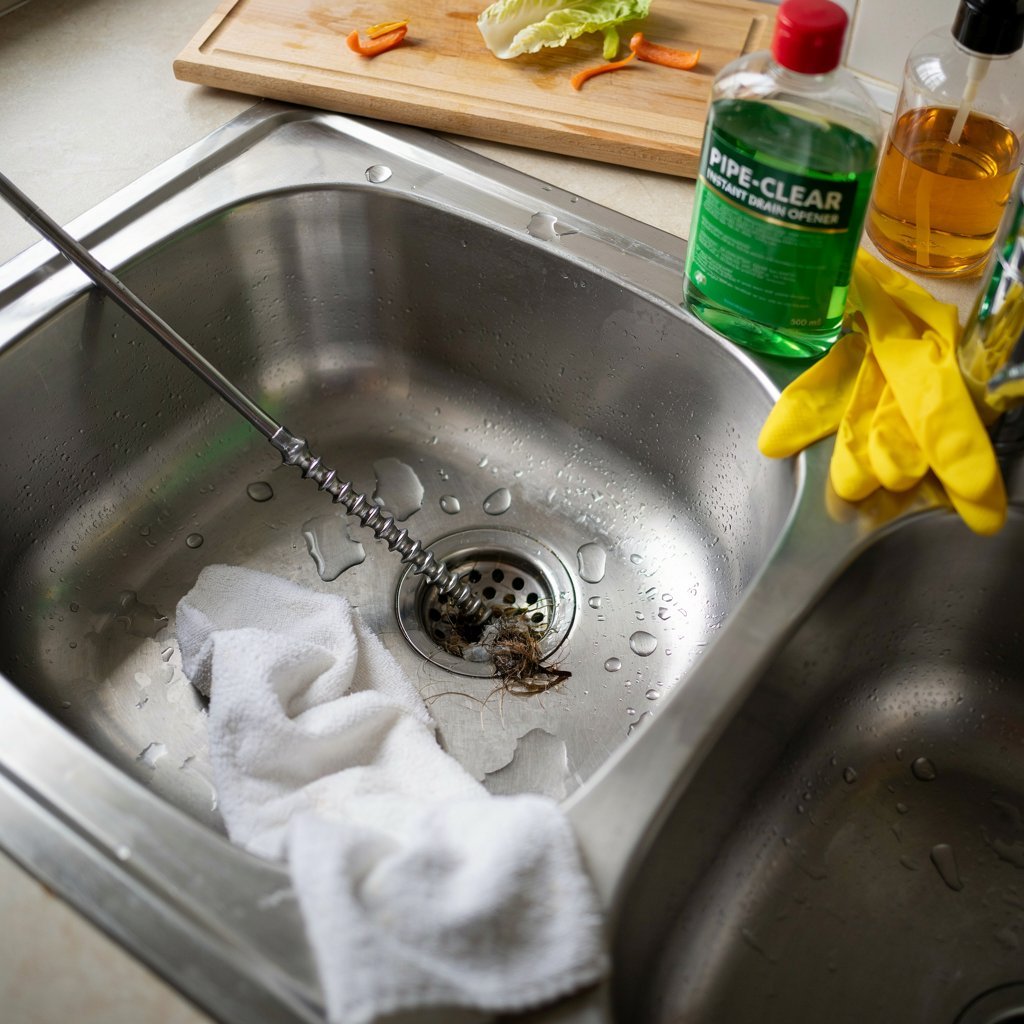
Cooking grease may enter the drain as a warm liquid, but it cools and sticks to the pipe farther from the sink. Food particles, coffee grounds, starch, and dishwashing residue then collect against the greasy surface, gradually restricting the line.
Foreign Objects in the Drain
Small objects can enter a drain accidentally and become lodged inside a trap, bend, or narrow section of pipe. Common examples include bottle caps, children’s toys, jewelry, cotton swabs, dental floss, wipes, and excessive amounts of toilet paper.
Mineral Scale and Older Drainpipes
Mesa’s mineral-rich water can leave deposits on plumbing fixtures and inside certain pipes over time. Although mineral scale may not create a clog by itself, it can reduce the pipe’s usable diameter and produce a rough interior surface that catches hair, grease, and debris more easily.
Older properties around Downtown Mesa, the Main Street corridor, West Mesa, and established neighborhoods near Country Club Drive may also contain sections of aging metal drainpipe. Corrosion and buildup inside these lines can make recurring clogs more likely. Snaking may restore flow, but a camera inspection or additional cleaning could be recommended when the pipe repeatedly blocks in the same location.
Our Drain Snaking Process
Step 1 — Evaluate the Drain Problem
We begin by identifying which fixture is clogged and how the problem developed. The technician may ask whether the drain is completely blocked, whether it has clogged before, and whether nearby fixtures are showing similar symptoms.
Step 2 — Select the Proper Access Point
The cable may be introduced through the fixture opening, a removed trap, a toilet flange, or an accessible drain cleanout. The safest access point depends on the fixture, the pipe layout, and the suspected location of the obstruction.
Step 3 — Choose the Correct Cable and Attachment
Different clogs require different equipment. A small bathroom sink line may need a narrow cable, while a kitchen branch line or floor drain may require a longer, heavier machine.
Step 4 — Break Apart or Remove the Blockage
The rotating cable is carefully advanced through the pipe until it reaches the obstruction. Controlled movement helps the attachment work through the clog without simply pushing the blockage deeper into the plumbing system.
Step 5 — Test Drainage and Explain the Findings
After the cable is removed, water is run through the fixture to confirm that the drain is flowing properly. The technician may repeat the process when additional resistance remains or recommend a camera inspection if the cable encounters an unusual obstruction.
Customer Testimonials
Drain Snaking vs. Hydro Jetting: Knowing the Difference
Drain snaking uses a flexible cable to reach an obstruction and create an open path through it. It is often a practical choice for isolated clogs caused by hair, paper, small objects, or compacted debris. It can be used in relatively small branch lines and usually requires less setup than high-pressure cleaning.
Hydro jetting uses pressurized water to wash buildup from a larger portion of the pipe’s interior. It may be recommended when grease, sludge, mineral deposits, or recurring residue coats the pipe walls rather than forming one concentrated obstruction.
Snaking can restore drainage without removing every layer of buildup inside the pipe. For that reason, a drain that repeatedly clogs after being snaked may need camera inspection, hydro jetting, or repair. The appropriate method depends on the pipe material, its condition, the type of blockage, and how often the problem returns.
Cost of Drain Snaking in Mesa
The cost of drain snaking depends on the type of fixture, the location and depth of the clog, the access available, and the equipment required to reach it. A bathroom sink blockage close to the trap is generally simpler to address than an obstruction located deep inside a long kitchen or laundry branch line.
Pricing can also vary when a toilet must be removed, a cleanout is difficult to access, or additional diagnostic work is needed. A recurring blockage may require a camera inspection to determine whether grease, scale, roots, damaged pipe, or another condition is causing the line to clog repeatedly.
You should receive clear pricing before the work begins. A professional evaluation helps avoid paying for a basic snaking service when the symptoms point to a different plumbing problem.
Why Mesa Homeowners Trust Us With Drain Snaking
Drain clogs may appear similar from the surface, but the correct approach depends on what is happening inside the pipe. Forcing an oversized cable through a small or fragile line can damage fittings, while using equipment that is too light may only create a temporary opening.
Our local service network helps Mesa residents connect with professionals who select equipment according to the drain size, fixture type, pipe condition, and suspected blockage. The goal is not simply to make standing water disappear for the moment. It is to clear the obstruction responsibly, test the result, and help you understand why the drain became blocked.
Service is available for homeowners, landlords, tenants, property managers, restaurants, offices, and other properties throughout Mesa, including Downtown Mesa, West Mesa, Dobson Ranch, Alta Mesa, Las Sendas, Red Mountain Ranch, Eastmark, Cadence, Mountain Bridge, Sunland Village, Leisure World, and neighborhoods near Power Road, Southern Avenue, Baseline Road, McKellips Road, University Drive, and the Loop 202.
Services We Provide
Residential
✅Clogged Drain Repair
✅Drain Snaking
✅Hydro Jetting
✅Video Camera Drain Inspection
✅Sewer Line Cleaning
✅Bathroom Drain Cleaning
✅Kitchen Drain Cleaning
✅Toilet Drain Cleaning
✅Laundry Drain Cleaning
✅Basement Drain Cleaning
✅Roof Drain Cleaning
✅Downspout Drain Cleaning
✅Preventative Drain Maintenance
✅Drain Odor Diagnosis and Removal
✅Slow Drain Diagnosis and Repair
✅Vent Stack Cleaning
✅Water Leak Detection
✅Main Line Cleaning
✅Floor Drain Cleaning
Frequently Asked Questions
What is drain snaking?
Drain snaking is a mechanical cleaning method that uses a flexible cable to reach a blockage inside a drainpipe. The cable is rotated through the obstruction to break it apart, open a path for water, or retrieve material from the line.
When should I have a drain professionally snaked?
Professional snaking may be appropriate when one fixture drains slowly, repeatedly clogs, produces bubbling sounds, or has stopped draining completely. It is especially useful when plunging has not worked and the obstruction is located beyond the fixture’s trap.
If multiple drains are backing up at the same time, the plumbing system should be evaluated for a main sewer-line problem before treating it as a single clogged drain.
Can I snake a drain myself?
Small hand-operated drain snakes may clear minor clogs located close to a fixture. However, using the wrong cable size, forcing the cable, or advancing it through an unsuitable access point can scratch fixtures, damage traps, become stuck inside the pipe, or push an object deeper into the line.
Is drain snaking safe for older pipes?
Drain snaking can be safe for older plumbing when the technician uses the correct cable, attachment, and operating technique. Aging, corroded, cracked, or fragile pipes require additional care because aggressive cabling may worsen an existing weakness.
When pipe condition is uncertain or the drain clogs repeatedly, a camera inspection may be recommended before or after snaking.
Will snaking completely clean the inside of my drainpipe?
Snaking is designed primarily to break through or remove a concentrated blockage. It may not wash away grease, sludge, mineral deposits, or residue coating the full interior wall of the pipe.
If widespread buildup is causing recurring problems, hydro jetting or another cleaning method may provide a more complete result.
Why did my drain clog again after it was snaked?
A clog can return when part of the obstruction remains, the pipe walls are heavily coated, inappropriate material continues entering the drain, or the pipe has a structural issue that traps debris. Common underlying problems include grease accumulation, mineral scale, corrosion, poor pipe slope, offset fittings, and damaged drain lines.